Barbarea vulgaris: Difference between revisions
CSV import |
CSV import |
||
| Line 25: | Line 25: | ||
[[Category:Medicinal plants]] | [[Category:Medicinal plants]] | ||
{{Flora-stub}} | {{Flora-stub}} | ||
== Barbarea vulgaris == | |||
<gallery> | |||
File:Brassicaceae_-_Barbarea_vulgaris-1.JPG|Brassicaceae - Barbarea vulgaris-1 | |||
File:31_Barbarea_vulgaris_R.Br.jpg|31 Barbarea vulgaris R.Br | |||
File:Barbarea_vulgaris_ENBLA06.jpg|Barbarea vulgaris ENBLA06 | |||
File:Brassicaceae_-_Barbarea_vulgaris-2_(2).JPG|Brassicaceae - Barbarea vulgaris-2 (2) | |||
File:Brassicaceae_-_Barbarea_vulgaris.JPG|Brassicaceae - Barbarea vulgaris | |||
</gallery> | |||
Latest revision as of 20:54, 25 February 2025
Barbarea vulgaris, also known as winter cress or yellow rocket, is a species of herbaceous plant in the family Brassicaceae. It is native to Eurasia and North Africa, but it has been introduced to many other parts of the world, including North America.
Description[edit]
Barbarea vulgaris is a biennial or perennial plant that typically grows to a height of 30 to 60 cm. The leaves are dark green, glossy, and have a characteristic cress-like taste. The flowers are bright yellow and appear in clusters at the top of the stems.
Distribution and habitat[edit]
Barbarea vulgaris is native to Eurasia and North Africa. It has been introduced to many other parts of the world, including North America, where it is now widely naturalized. The plant prefers moist, nutrient-rich soils and is often found in meadows, fields, and along roadsides.
Uses[edit]
Barbarea vulgaris has been used in traditional medicine for its supposed healing properties. It is also used as a salad green in some cultures due to its cress-like taste.
Cultivation[edit]
Barbarea vulgaris is a hardy plant that can tolerate a range of soil conditions. It prefers full sun to partial shade and requires regular watering. The plant can be propagated by seeds, which should be sown in the spring or autumn.
Conservation status[edit]
Barbarea vulgaris is not considered to be at risk of extinction. However, like all wild plants, it may be affected by habitat loss and other environmental changes.
See also[edit]

This flora-related article is a stub. You can help WikiMD by expanding it.
Barbarea vulgaris[edit]
-
 Brassicaceae - Barbarea vulgaris-1
 -
 31 Barbarea vulgaris R.Br
 -
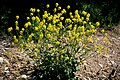 Barbarea vulgaris ENBLA06
 -
 Brassicaceae - Barbarea vulgaris-2 (2)
 -
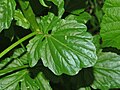 Brassicaceae - Barbarea vulgaris


.JPG)

