Milk float: Difference between revisions
CSV import |
CSV import |
||
| Line 23: | Line 23: | ||
{{UK-stub}} | {{UK-stub}} | ||
{{vehicle-stub}} | {{vehicle-stub}} | ||
== Milk_float == | |||
<gallery> | |||
File:Milk_float_-_Liverpool_(modified_background).jpg|Milk float - Liverpool (modified background) | |||
File:Commercial._Elmhurst_Dairy_BAnQ_P48S1P07599.jpg|Commercial Elmhurst Dairy | |||
File:Milk_float,_c_1904.jpg|Milk float, c 1904 | |||
File:Dairy_Crest_milk_float_(modified).jpg|Dairy Crest milk float (modified) | |||
File:Milk_cart.jpg|Milk cart | |||
File:Ford_Transit_milk_float.jpg|Ford Transit milk float | |||
File:Dairy_Crest_Ex_Unigate_Wales_And_Edwards_Rangemaster_Milk_Float.jpg|Dairy Crest Ex Unigate Wales And Edwards Rangemaster Milk Float | |||
File:Hevosvaunuja_Helsingin_Meijeriliikkeen_pihalla,_toisessa_kerroksessa_konttori_-_-_hkm.HKMS000005-km003lbl.jpg|Hevosvaunuja Helsingin Meijeriliikkeen pihalla, toisessa kerroksessa konttori | |||
</gallery> | |||
Latest revision as of 20:53, 25 February 2025
Milk float is a vehicle specifically designed for the delivery of fresh milk. Today, milk floats are usually battery electric vehicles (BEV), but they were formerly horse-drawn. They were once common in many European countries, particularly the United Kingdom, and were operated by local dairies. However, in recent years, as the use of the doorstop delivery declined, the vehicles have become less common. They are however still in use in parts of the UK. Some dairies in the UK, including Muller have had to re-introduce the service in the wake of the COVID-19 pandemic in 2020.
History[edit]
The first milk floats were horse-drawn with the first ones being used in the 1860s. In the early 20th century, motorized vehicles became more common, with the first electric milk floats being introduced in the 1940s. The switch to electric vehicles came about because they were quieter and less likely to disturb people in the early morning hours.
Design[edit]
Milk floats generally have sliding doors or open sides for easy access to the products. The float in the UK is typically aluminium, and the vehicles are designed for low speeds because of the weight of the batteries.
Use[edit]
In the UK, many floats still in use are operated by Dairy Crest. In 1981, the company operated over 1,750 battery-electric vehicles out of approximately 8,000 in the country, but by 2009, the total number of electric floats in the UK had decreased to 4,000, and Dairy Crest owned around 1,300.
See also[edit]
References[edit]
<references />
.svg)

Milk_float[edit]
-
 Milk float - Liverpool (modified background)
 -
 Commercial Elmhurst Dairy
 -
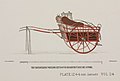 Milk float, c 1904
 -
 Dairy Crest milk float (modified)
 -
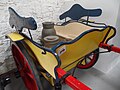 Milk cart
 -
 Ford Transit milk float
 -
 Dairy Crest Ex Unigate Wales And Edwards Rangemaster Milk Float
 -
 Hevosvaunuja Helsingin Meijeriliikkeen pihalla, toisessa kerroksessa konttori
.jpg)


.jpg)


