Cookie cutter: Difference between revisions
CSV import |
CSV import |
||
| Line 37: | Line 37: | ||
File:Keks_ausstechen.jpg | File:Keks_ausstechen.jpg | ||
File:Motlle_crespellines.jpg | File:Motlle_crespellines.jpg | ||
</gallery> | |||
== Cookie_cutter == | |||
<gallery> | |||
File:Keks_ausstechen.jpg|Keks ausstechen | |||
File:Motlle_crespellines.jpg|Motlle crespellines | |||
</gallery> | </gallery> | ||
Revision as of 12:03, 25 February 2025
Cookie cutter refers to a tool used in the shaping of cookie dough. Traditionally made from metal or plastic, cookie cutters come in a wide variety of shapes and sizes, suitable for different occasions, themes, and holidays. The primary function of a cookie cutter is to cut out cookie dough in specific shapes before baking, allowing for the creation of uniformly shaped cookies. This article delves into the history, types, and uses of cookie cutters, as well as their significance in various cultures.
History
The history of cookie cutters traces back to ancient civilizations, where early versions were made from wood, ceramic, or metal. These were used not only for cutting shapes out of cookie dough but also for ceremonial purposes and to create symbolic representations in food. The popularity of cookie cutters in the United States surged in the 1930s, with the advent of more affordable and durable materials like aluminum and plastic.
Types
Cookie cutters can be categorized based on their material, design, and functionality.
Material
- Metal cookie cutters are durable and offer sharp edges for precise cuts. They are typically made from tin, stainless steel, or aluminum.
- Plastic cookie cutters are less expensive, offer a variety of colors, and are safer for children to use. However, they may not be as sharp as metal cutters, potentially leading to less precise edges.
Design
- Simple cut-outs are the most common type, consisting of a single shape like a star, heart, or Christmas tree.
- Detailed cutters have intricate designs that imprint patterns onto the dough, creating more elaborate cookies.
- Custom cookie cutters can be made to order, allowing for personalized shapes and designs.
Functionality
- Single cutters are used to cut individual cookies.
- Cookie cutter sets come in themes or matching sets, useful for creating a cohesive look for events or parties.
Uses
Cookie cutters are primarily used in baking, especially in the preparation of cookies for holidays, special occasions, and themed events. They are also used in educational settings for arts and crafts, helping children develop motor skills and creativity. In addition, cookie cutters can serve as tools for shaping other food items, such as sandwiches, pancakes, and fondant decorations for cakes.
Cultural Significance
In many cultures, cookies shaped with specific cutters are associated with particular holidays and traditions. For example, gingerbread men and Christmas trees are popular shapes for Christmas cookies in the United States and Europe. Cookie cutters in the shape of animals, letters, and numbers are also used educationally to teach children about different subjects in a fun and interactive way.
Conclusion
Cookie cutters are a versatile and essential tool in the kitchen, offering a creative way to shape cookies and other food items. Their variety in material, design, and functionality makes them suitable for professional bakers and hobbyists alike. The cultural significance of cookie cutters adds an extra layer of meaning to the cookies they create, making them an integral part of culinary traditions around the world.


Cookie_cutter
-
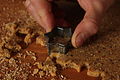 Keks ausstechen
 -
 Motlle crespellines
