Romanian cuisine: Difference between revisions
CSV import |
CSV import |
||
| Line 28: | Line 28: | ||
{{European-cuisine-stub}} | {{European-cuisine-stub}} | ||
{{food-stub}} | {{food-stub}} | ||
== Romanian_cuisine == | |||
<gallery> | |||
File:Romanian_potato_soup.jpg|Romanian potato soup | |||
File:Ciorba-e.jpg|Ciorbă | |||
File:Romanian_soup.JPG|Romanian soup | |||
File:Fasole_cu_afumatura_si_ardei.jpg|Fasole cu afumătură și ardei | |||
File:Mici.JPG|Mici | |||
File:Frigărui.jpg|Frigărui | |||
File:Lahana_sarma.JPG|Lahana sarma | |||
File:Roe_Sallad.jpg|Roe salad | |||
</gallery> | |||
Latest revision as of 11:56, 25 February 2025
Romanian cuisine is the culinary tradition of Romania, a country in Eastern Europe. It is a diverse blend of different dishes from several traditions with which it has come into contact, but it also maintains its own character. It has been greatly influenced by Ottoman cuisine while it also includes influences from the cuisines of other neighbours, such as the Germans, Serbs, and Hungarians.
History[edit]
The history of Romanian cuisine began with the country's settlement by the Dacians, who were known for their agricultural skills. They cultivated grains, vegetables, and raised animals for meat, dairy, and eggs. The Romans, who conquered Dacia, also left their mark on Romanian cuisine, introducing dishes like sarmale (stuffed cabbage rolls) and mamaliga (polenta).
Ingredients[edit]
Romanian cuisine is rich in meat, especially pork, chicken, and beef. Vegetables, cereals, and dairy products are also consumed. The most commonly used ingredients in Romanian cuisine include garlic, onions, and various herbs such as dill, parsley, and thyme. Romanian dishes are often flavored with vinegar, wine, and tuica (a strong Romanian spirit).
Dishes[edit]
Some of the most popular Romanian dishes include sarmale, mamaliga, mititei (grilled minced meat rolls), and ciorba (sour soup). Desserts, such as papanasi (fried dough filled with soft cheese and topped with sour cream and jam), are also popular.
Beverages[edit]
Romania is known for its wines, which are produced in several regions of the country. Tuica, a strong spirit made from plums, is also a traditional Romanian drink. Non-alcoholic beverages include mineral water and fruit juices.
See also[edit]
This European cuisine related article is a stub. You can help WikiMD by expanding it.

Romanian_cuisine[edit]
-
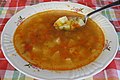 Romanian potato soup
 -
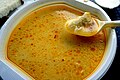 Ciorbă
 -
 Romanian soup
 -
 Fasole cu afumătură și ardei
 -
 Mici
Mici -
 Frigărui
 -
 Lahana sarma
 -
 Roe salad


