Bazin (bread): Difference between revisions
CSV import Tags: mobile edit mobile web edit |
CSV import |
||
| Line 69: | Line 69: | ||
<references />. | <references />. | ||
{{dictionary-stub1}} | {{dictionary-stub1}} | ||
<gallery> | |||
File:Bazin.jpg|Bazin bread | |||
</gallery> | |||
Latest revision as of 11:46, 25 February 2025
Bazin (bread)[edit]
Bazin is a traditional type of bread commonly consumed in North Africa, particularly in countries such as Algeria, Tunisia, and Libya. It is a staple food in these regions and holds cultural significance. Bazin is known for its unique texture and taste, making it a popular choice among locals and tourists alike.
History[edit]
The origins of Bazin can be traced back to ancient times when it was a common food item among the Berber people of North Africa. The recipe has been passed down through generations, with slight variations in different regions. The traditional method of making Bazin involves using locally sourced ingredients and a specific cooking technique.
Ingredients[edit]
The main ingredients used in making Bazin are:
- Semolina flour: This is the primary ingredient and gives Bazin its distinctive texture. Semolina flour is made from durum wheat and is known for its high protein content.
- Water: Water is added to the semolina flour to form a dough. The amount of water used may vary depending on the desired consistency.
- Salt: Salt is added to enhance the flavor of the bread.
Preparation[edit]
To prepare Bazin, the following steps are typically followed:
1. In a large bowl, combine the semolina flour and salt.
2. Gradually add water to the mixture while kneading the dough. The dough should be firm and elastic.
3. Once the dough is well-kneaded, cover it with a cloth and let it rest for about 30 minutes. This allows the gluten to develop and gives the bread a better texture.
4. After the resting period, divide the dough into small portions and shape them into round balls.
5. Using a special cooking utensil called a tabouna or a heavy-bottomed pan, place the dough balls inside and flatten them with your hands to form a circular shape.
6. Cook the flattened dough on low heat for about 30 minutes, flipping it occasionally to ensure even cooking.
7. Once cooked, remove the Bazin from the pan and let it cool before serving.
Serving[edit]
Bazin is typically served with various accompaniments, such as:
- Stews: Bazin is often enjoyed with flavorful stews, such as couscous or tagine. The bread is used to scoop up the stew, adding a delightful texture to the meal.
- Dips and spreads: Bazin can also be served with dips and spreads, such as hummus or baba ganoush. The bread's slightly dense texture makes it perfect for spreading or dipping.
Cultural Significance[edit]
Bazin holds significant cultural value in North African societies. It is often associated with communal gatherings and special occasions. In some regions, the preparation and consumption of Bazin are considered a form of art, with specific techniques and rituals followed.
Health Benefits[edit]
Bazin, being made from semolina flour, offers several health benefits:
- Rich in nutrients: Semolina flour is a good source of protein, fiber, and essential minerals like iron and magnesium.
- Low in fat: Bazin is relatively low in fat, making it a healthier alternative to other bread varieties.
- Satiating: The high protein content in Bazin helps keep you feeling full for longer, making it a satisfying choice.
See Also[edit]
- North African cuisine: Explore more about the diverse culinary traditions of North Africa.
- Semolina: Learn about the flour used to make Bazin and its various uses in cooking.
- Tabouna: Discover the traditional cooking utensil used to prepare Bazin.
References[edit]
<references />.

-
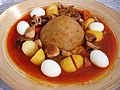 Bazin bread

