Roti jala: Difference between revisions
CSV import Tags: mobile edit mobile web edit |
CSV import |
||
| Line 24: | Line 24: | ||
{{Malaysia-food-stub}} | {{Malaysia-food-stub}} | ||
{{food-stub}} | {{food-stub}} | ||
<gallery> | |||
File:Rotijala.jpg|Roti jala | |||
File:Roti_jala_tin_cup_01.jpg|Roti jala tin cup | |||
File:Roti_jala_penang.JPG|Roti jala Penang | |||
</gallery> | |||
Revision as of 11:46, 25 February 2025
Roti Jala is a traditional Malaysian dish, often served as an accompaniment to curries or eaten as a snack. Its name translates to "net bread", referring to the net-like pattern created by its unique method of preparation.
History
The origins of Roti Jala can be traced back to the Malay community in Malaysia. It is believed to have been influenced by the Indian roti, which was brought to Malaysia by Indian traders and immigrants. Over time, the recipe was adapted to suit local tastes and ingredients, resulting in the creation of Roti Jala.
Preparation
Roti Jala is made from a batter consisting of wheat flour, eggs, coconut milk, turmeric for colour, and a pinch of salt. The batter is poured through a special mould with five holes into a hot pan, creating a lace-like pattern. The cooked Roti Jala is then folded or rolled before serving.
Serving
Roti Jala is typically served with curry dishes, such as chicken or mutton curry. The net-like structure of the bread allows it to soak up the curry, making it a delicious and popular choice for meals. It can also be served with sweet dips like condensed milk or coconut jam for a dessert or snack.
Cultural Significance
Roti Jala holds a significant place in Malaysian culture. It is often prepared for special occasions and celebrations, such as weddings and traditional Malay festivals like Hari Raya Aidilfitri.
See Also
This Malaysia-food related article is a stub. You can help WikiMD by expanding it.

-
Roti jala
-
Roti jala tin cup
-
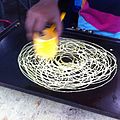 Roti jala Penang


