Red drum: Difference between revisions
CSV import Tags: mobile edit mobile web edit |
CSV import |
||
| Line 23: | Line 23: | ||
[[Category:Game fish]] | [[Category:Game fish]] | ||
{{medicine-stub}} | {{medicine-stub}} | ||
== Red_drum == | |||
<gallery> | |||
File:Redfish_or_Red_drum.webp|Redfish or Red drum | |||
File:Red_Drum_(Sciaenops_ocellatus).jpg|Red Drum (Sciaenops ocellatus) | |||
File:Red_Drum_Weight_vs._Length.jpg|Red Drum Weight vs. Length | |||
</gallery> | |||
Latest revision as of 11:38, 25 February 2025
Red drum, also known as redfish or channel bass, is a popular game fish found in the coastal waters of the southeastern United States. Its scientific name is Sciaenops ocellatus. Red drum are known for their vibrant reddish-bronze coloration and distinctive black spot near their tail.
Description[edit]
Red drum have a streamlined body with a slightly arched back and a pointed snout. They typically range in size from 18 to 40 inches in length, although larger specimens exceeding 50 inches have been recorded. Red drum are capable of producing a drumming sound by vibrating their swim bladder, which is used for communication and courtship.
Habitat[edit]
Red drum are primarily found in shallow coastal waters, including bays, estuaries, and tidal creeks. They prefer areas with sandy or muddy bottoms and are often associated with oyster reefs and seagrass beds. Red drum are known to migrate between freshwater and saltwater environments, making them a versatile species.
Diet[edit]
Red drum are opportunistic feeders, consuming a variety of prey including fish, shrimp, crabs, and mollusks. They use their powerful jaws and sharp teeth to crush and consume their food. Red drum are known to exhibit a voracious feeding behavior, especially during periods of high activity.
Reproduction[edit]
Red drum reach sexual maturity between 3 to 5 years of age. Spawning typically occurs in late summer and early fall, with females releasing thousands of eggs into the water column. The eggs hatch into larvae, which eventually develop into juvenile red drum. Red drum have a relatively fast growth rate, reaching adult size within a few years.
Conservation[edit]
Red drum are a popular target for recreational anglers due to their fighting ability and delicious flesh. However, overfishing and habitat degradation have led to declines in red drum populations in some areas. To protect red drum populations, regulations on catch limits and size restrictions have been implemented in many states.
In Popular Culture[edit]
Red drum have become a symbol of coastal fishing culture in the southeastern United States. They are featured in various fishing tournaments and are a sought-after species for anglers of all skill levels. Red drum are also a popular target for catch-and-release fishing, promoting sustainable practices among recreational fishermen.

Red_drum[edit]
-
 Redfish or Red drum
 -
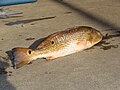 Red Drum (Sciaenops ocellatus)
 -
 Red Drum Weight vs. Length

.jpg)

