Coffee production in Brazil: Difference between revisions
CSV import |
CSV import |
||
| Line 41: | Line 41: | ||
[[Category:Coffee]] | [[Category:Coffee]] | ||
[[Category:Economy of Brazil]] | [[Category:Economy of Brazil]] | ||
<gallery> | |||
File:Fazenda_Da_Lagoa.jpg|Fazenda Da Lagoa | |||
File:Japanese_Workers_in_Coffee_Gathering.jpg|Japanese Workers in Coffee Gathering | |||
File:Cafe_porto_Santos_1880.jpg|Cafe porto Santos 1880 | |||
File:Photo_A_young_Brazilian_farmer_selecting_the_ripest_coffee_beans_1961_-_Touring_Club_Italiano_1.2753.jpg|A young Brazilian farmer selecting the ripest coffee beans 1961 | |||
File:Café_no_terreiro_de_pedra.jpg|Café no terreiro de pedra | |||
File:Brazilian_coffee_growing_regions_(arabica_and_robusta).png|Brazilian coffee growing regions (arabica and robusta) | |||
File:Sacos_de_café,_Casa_do_Bandeirante_2.JPG|Sacos de café, Casa do Bandeirante | |||
</gallery> | |||
Latest revision as of 11:33, 25 February 2025
Coffee Production in Brazil[edit]
Coffee production in Brazil is a significant industry that plays a crucial role in the country's economy. Brazil is the largest producer of coffee in the world, accounting for approximately one-third of global coffee production. The favorable climate, fertile soil, and vast agricultural land make Brazil an ideal location for coffee cultivation.
History[edit]
Coffee cultivation in Brazil dates back to the early 18th century when the first coffee plants were brought to the country. The coffee industry quickly gained momentum, and by the 19th century, Brazil became the world's leading coffee producer. The industry experienced significant growth due to the abolition of slavery, which led to an increase in labor availability.
Geography and Climate[edit]
Brazil's vast coffee plantations are primarily located in the southeastern states of Minas Gerais, São Paulo, and Paraná. These regions offer ideal conditions for coffee cultivation, including a combination of altitude, temperature, rainfall, and soil composition. The mountainous terrain and well-distributed rainfall provide the necessary conditions for the growth of high-quality coffee beans.
Varieties[edit]
Brazil produces a wide range of coffee varieties, including Arabica and Robusta. Arabica coffee is the most commonly cultivated variety, known for its mild flavor and aroma. Robusta coffee, on the other hand, is more robust and has a higher caffeine content. Both varieties have their own unique characteristics and are used for different purposes in the coffee industry.
Production Process[edit]
The production process of coffee in Brazil involves several stages, including planting, harvesting, processing, and roasting. Coffee plants are typically grown from seeds in nurseries and then transplanted to the fields. Harvesting is done manually or mechanically, depending on the size of the plantation. After harvesting, the coffee cherries undergo processing, which includes removing the outer skin, pulp, and parchment to reveal the coffee beans. The beans are then dried, sorted, and roasted to achieve the desired flavor and aroma.
Economic Impact[edit]
Coffee production has a significant economic impact on Brazil. It contributes to the country's GDP, provides employment opportunities, and supports the livelihoods of millions of people involved in the industry. The revenue generated from coffee exports plays a crucial role in balancing Brazil's trade deficit and strengthening its economy.
Challenges and Future Outlook[edit]
Despite its dominance in the global coffee market, Brazil faces various challenges in the coffee industry. Climate change, pests, diseases, and market fluctuations pose significant risks to coffee production. However, the Brazilian government and coffee industry stakeholders are actively working on implementing sustainable practices, improving productivity, and investing in research and development to overcome these challenges and ensure the future growth of the industry.
See Also[edit]
References[edit]
<references />
-
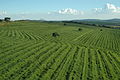 Fazenda Da Lagoa
 -
 Japanese Workers in Coffee Gathering
 -
 Cafe porto Santos 1880
 -
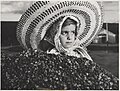 A young Brazilian farmer selecting the ripest coffee beans 1961
 -
 Café no terreiro de pedra
 -
 Brazilian coffee growing regions (arabica and robusta)
 -
 Sacos de café, Casa do Bandeirante


.png)

