Milo (drink): Difference between revisions
CSV import Tags: mobile edit mobile web edit |
CSV import |
||
| Line 25: | Line 25: | ||
[[Category:Food product brands]] | [[Category:Food product brands]] | ||
{{food-stub}} | {{food-stub}} | ||
<gallery> | |||
File:Australian_milo.jpg|Australian milo | |||
File:1940s_Nestlé_Milo_tin.jpg|1940s Nestlé Milo tin | |||
File:Food_snacks_Nestle_Milo_refill_pack_and_milo.jpg|Food snacks Nestle Milo refill pack and milo | |||
File:Iced_Milo.jpg|Iced Milo | |||
File:Kota-Kinabalu_Sabah_Borneo-International-Marathon-2015-95.jpg|Kota-Kinabalu Sabah Borneo International Marathon 2015 | |||
File:Milo-Split.jpg|Milo Split | |||
</gallery> | |||
Latest revision as of 11:27, 25 February 2025
Milo is a chocolate and malt powder typically mixed with hot water or milk (or both) to produce a beverage popular in many parts of the world. Produced by Nestlé, Milo was originally developed by Australian inventor Thomas Mayne in 1934.
History[edit]
Milo was first developed during the depression as a direct response to the need for a nutritional drink that was affordable. Thomas Mayne, a Nestlé engineer, created the formula for Milo and presented it at the Sydney Royal Easter Show in 1934. The product was an instant success and has been a staple in many households around the world ever since.
Ingredients[edit]
The main ingredients of Milo are malted barley, sugar, milk powder, and cocoa. It also contains minerals and vitamins such as iron, calcium, and vitamins B1, B2, and C. These ingredients make Milo a nutritious drink, providing energy and promoting growth and development.
Consumption[edit]
Milo is consumed in several ways. It is often mixed with milk or water to create a hot or cold beverage. In some countries, it is also used as a topping on ice cream or breakfast cereals. In Australia, a common way to consume Milo is to sprinkle it on top of milk, creating a 'Milo mountain'.
Variations[edit]
There are several variations of Milo, tailored to the tastes and nutritional needs of different markets. For example, in Malaysia, Milo with less sugar is available, while in Chile, Milo is sold with added Actigen-E, a mix of eight vitamins and four minerals.
Cultural Impact[edit]
Milo has a significant cultural impact in many countries. It sponsors sports events and has been associated with promoting an active lifestyle. The Milo Marathon, held annually in the Philippines, is one of the largest and most prestigious running events in the country.
See Also[edit]

-
 Australian milo
 -
 1940s Nestlé Milo tin
 -
 Food snacks Nestle Milo refill pack and milo
 -
 Iced Milo
 -
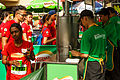 Kota-Kinabalu Sabah Borneo International Marathon 2015
 -
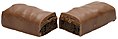 Milo Split


