Penicillium roqueforti: Difference between revisions
CSV import |
CSV import |
||
| Line 31: | Line 31: | ||
<gallery> | <gallery> | ||
File:Blue_Stilton_Penicillium.jpg | File:Blue_Stilton_Penicillium.jpg | ||
</gallery> | |||
== Penicillium roqueforti == | |||
<gallery> | |||
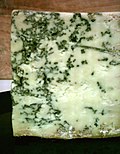
File:Blue_Stilton_Penicillium.jpg|Blue Stilton Penicillium | |||
</gallery> | </gallery> | ||
Revision as of 11:16, 25 February 2025
Penicillium roqueforti is a common species of fungus in the genus Penicillium. It is used in the production of several blue-veined cheeses, including Roquefort, blue, Gorgonzola, and Stilton.
Taxonomy
Penicillium roqueforti belongs to the Penicillium genus, which is a group of molds often found in the environment. The species name 'roqueforti' is derived from the cheese Roquefort, which is made using this fungus.
Characteristics
Penicillium roqueforti is characterized by its blue to green spore color, a common trait among the Penicillium genus. It is a mesophile, meaning it grows best in moderate temperature conditions. It is also aerobic, requiring oxygen to grow.
Uses
The primary use of Penicillium roqueforti is in the production of blue-veined cheeses. The fungus is added to the cheese curds, and then the cheese is left to mature. During this time, the fungus grows and spreads, creating the distinctive blue veins and contributing to the strong flavor and aroma of the cheese.
Health Effects
While Penicillium roqueforti is generally safe for consumption in cheese, it can cause allergic reactions in some individuals. It is also capable of producing mycotoxins, although this is usually not a concern in cheese production as the conditions are not conducive for mycotoxin production.
See Also


Penicillium roqueforti

Penicillium roqueforti
-
 Blue Stilton Penicillium
