Sexual mimicry: Difference between revisions
CSV import Tags: mobile edit mobile web edit |
CSV import |
||
| Line 24: | Line 24: | ||
{{biology-stub}} | {{biology-stub}} | ||
<gallery> | |||
File:Salaria_pavo_female_2009_G4.jpg|Salaria pavo female | |||
File:Salaria_pavo_male_2009_G2.jpg|Salaria pavo male | |||
File:Sepia_apama.jpg|Sepia apama | |||
File:Ficedula_hypoleuca_Sussex_2.jpg|Ficedula hypoleuca Sussex 2 | |||
File:Ficedula_hypoleuca_Sussex_8.jpg|Ficedula hypoleuca Sussex 8 | |||
File:Platysaurus_broadleyi01.jpg|Platysaurus broadleyi | |||
File:Biology_Illustration_Animals_Insects_Drosophila_melanogaster.svg|Drosophila melanogaster | |||
File:Paracerceis_sculpta_illustration.png|Paracerceis sculpta illustration | |||
</gallery> | |||
Latest revision as of 00:00, 25 February 2025
Sexual mimicry refers to a biological phenomenon where an organism exhibits physical or behavioral traits that are not typical of its own sex, often resembling the opposite sex, to gain a reproductive advantage. This strategy is observed across various species, including insects, birds, and fish, and can serve multiple purposes such as avoiding aggression, gaining access to mates, or deceiving competitors.
Mechanisms[edit]
Sexual mimicry operates through several mechanisms, each tailored to the specific ecological and social context of the species. These mechanisms include:
- Batesian mimicry: Where a harmless species mimics the warning signals of a harmful species to avoid predation. In the context of sexual mimicry, a less dominant male might mimic females to avoid aggression from more dominant males.
- Aggressive mimicry: This involves predators mimicking something harmless or appealing to their prey. In sexual mimicry, an example would be males mimicking females to get closer to potential mates without detection.
- Reproductive mimicry: Here, individuals mimic the opposite sex or a different status within their sex to gain reproductive opportunities. For instance, some male fish mimic females to sneak copulations with females guarded by dominant males.
Examples[edit]
- In the African cichlid fish (Pseudocrenilabrus multicolor), some males adopt female coloration and behavior, allowing them to infiltrate territories of dominant males and mate with females.
- The cuttlefish (Sepia spp.) is known for males that mimic females to avoid detection by larger, dominant males, thus gaining access to potential mates.
- Among orchid bees (Euglossini spp.), some males mimic females to avoid aggression from other males, facilitating access to food resources or mating opportunities.
Evolutionary Significance[edit]
Sexual mimicry raises intriguing questions about sexual selection and the evolution of mating strategies. It challenges traditional views of sexual selection by demonstrating the flexibility and complexity of reproductive behaviors. The existence of sexual mimicry suggests that in some species, the benefits of deceiving rivals or avoiding aggression outweigh the costs of not displaying typical secondary sexual characteristics.
Ethical and Conservation Considerations[edit]
While sexual mimicry is a fascinating natural phenomenon, it also highlights the importance of understanding the intricate behaviors and strategies of species for conservation efforts. Misinterpretation of such behaviors could lead to misguided conservation strategies. Therefore, a deep understanding of the reproductive strategies of endangered species is crucial for their effective conservation.

-
Salaria pavo female
-
Salaria pavo male
-
 Sepia apama
 -
 Ficedula hypoleuca Sussex 2
 -
 Ficedula hypoleuca Sussex 8
 -
 Platysaurus broadleyi
 -
 Drosophila melanogaster
 -
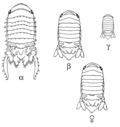 Paracerceis sculpta illustration


