Alphacoronavirus 1: Difference between revisions
No edit summary |
CSV import |
||
| Line 22: | Line 22: | ||
[[Category:Coronaviridae]] | [[Category:Coronaviridae]] | ||
<gallery> | |||
File:02-0042-F1.E.jpg|02-0042-F1.E | |||
</gallery> | |||
Latest revision as of 23:53, 24 February 2025
Alphacoronavirus 1 is a species of virus in the genus Alphacoronavirus, which is part of the family Coronaviridae. This virus is known to infect a variety of mammalian hosts, including humans, and is associated with respiratory and gastrointestinal diseases.
Taxonomy[edit]
Alphacoronavirus 1 belongs to the genus Alphacoronavirus, which is one of the four genera in the subfamily Orthocoronavirinae. The other genera are Betacoronavirus, Gammacoronavirus, and Deltacoronavirus. Alphacoronaviruses are positive-sense single-stranded RNA viruses.
Structure[edit]
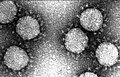
The structure of Alphacoronavirus 1 is typical of coronaviruses, featuring a lipid bilayer envelope with spike proteins that give the virus its characteristic crown-like appearance. The viral genome is a single-stranded RNA molecule, which is encapsulated within a nucleocapsid protein.
Pathogenesis[edit]
Alphacoronavirus 1 is known to cause disease in several animal species. In humans, it can lead to mild respiratory infections, although more severe cases can occur in individuals with compromised immune systems. In animals, it is associated with diseases such as feline infectious peritonitis in cats and transmissible gastroenteritis in pigs.
Transmission[edit]
The virus is primarily transmitted through respiratory droplets, but it can also spread via direct contact with infected individuals or contaminated surfaces. In animals, transmission can occur through fecal-oral routes, particularly in crowded or unsanitary conditions.
Prevention and Control[edit]
Preventive measures for Alphacoronavirus 1 include maintaining good hygiene practices, such as regular handwashing and avoiding close contact with infected individuals. In veterinary settings, vaccination and biosecurity measures are important to control the spread of the virus among animal populations.
Related pages[edit]
-
 02-0042-F1.E

