Extinction (neurology): Difference between revisions
CSV import |
|||
| Line 29: | Line 29: | ||
{{Reflist}} | {{Reflist}} | ||
[[Category:Neurology]] | [[Category:Neurology]] | ||
| Line 38: | Line 36: | ||
File:Gray742.png|Gray742 | File:Gray742.png|Gray742 | ||
File:Explanation_of_the_grouping_effect_in_extinction.png|Explanation of the grouping effect in extinction | File:Explanation_of_the_grouping_effect_in_extinction.png|Explanation of the grouping effect in extinction | ||
</gallery> | </gallery> | ||
Revision as of 23:54, 23 February 2025
| Extinction (neurology) | |
|---|---|
| Synonyms | N/A |
| Pronounce | N/A |
| Specialty | N/A |
| Symptoms | N/A |
| Complications | N/A |
| Onset | N/A |
| Duration | N/A |
| Types | N/A |
| Causes | N/A |
| Risks | N/A |
| Diagnosis | N/A |
| Differential diagnosis | N/A |
| Prevention | N/A |
| Treatment | N/A |
| Medication | N/A |
| Prognosis | N/A |
| Frequency | N/A |
| Deaths | N/A |
Extinction is a neurological disorder that occurs when a person is unable to perceive a stimulus on one side of their body when a similar stimulus is presented simultaneously on the opposite side. This phenomenon is often observed in patients who have suffered damage to the parietal lobe of the brain, particularly following a stroke.
Pathophysiology
Extinction is typically associated with lesions in the right hemisphere of the brain, which can lead to deficits in spatial attention. The parietal lobe plays a crucial role in integrating sensory information and is responsible for the perception of stimuli in the contralateral field of vision. When this area is damaged, the brain may fail to register stimuli on the side opposite the lesion, especially when competing stimuli are present on the same side as the lesion.
Clinical Presentation
Patients with extinction may not report any symptoms when stimuli are presented individually. However, when two stimuli are presented simultaneously, one on each side of the body, the patient may only perceive the stimulus on the side ipsilateral to the brain lesion. This can be tested using neurological examination techniques such as the double simultaneous stimulation test.
Diagnosis
The diagnosis of extinction is primarily clinical and involves a thorough neurological examination. Tests such as the double simultaneous stimulation test are used to assess the presence and extent of extinction. Neuroimaging techniques, such as MRI or CT scan, may be employed to identify the location and extent of brain lesions.
Treatment
There is no specific treatment for extinction, but rehabilitation strategies can help patients improve their attentional capacities. Occupational therapy and physical therapy may be beneficial in helping patients adapt to their deficits. In some cases, cognitive rehabilitation techniques are used to enhance awareness and attention to the affected side.
See Also
References
-
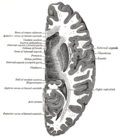 Gray742
 -
Explanation of the grouping effect in extinction


