Light pollution: Difference between revisions
CSV import |
CSV import |
||
| Line 43: | Line 43: | ||
{{Environment-stub}} | {{Environment-stub}} | ||
== Light pollution == | |||
<gallery> | |||
File:Skybeamer-uniqema-640.jpg|Skybeamer | |||
File:Phoenix_Lights_from_afar.jpg|Phoenix Lights from afar | |||
File:HPS-lamps.jpg|HPS lamps | |||
File:Las_Vegas_Strip.png|Las Vegas Strip | |||
File:San_Tan_Mountain_Lights.jpg|San Tan Mountain Lights | |||
File:Eso2004a.jpg|ESO image | |||
File:World_light_pollution.jpg|World light pollution | |||
File:YOUTUBE_HQ-12573_blackmarble_2017_youtube_hq.webm|Black Marble 2017 | |||
File:Lichtverschmutzung_in_Kastelruth.JPG|Lichtverschmutzung in Kastelruth | |||
File:Scorpion_in_arizona.jpg|Scorpion in Arizona | |||
File:Birds_flying_trace.jpg|Birds flying trace | |||
</gallery> | |||
Latest revision as of 21:45, 23 February 2025
Light Pollution
Light pollution, also known as photopollution or luminous pollution, is the presence of anthropogenic light in the night environment. It is exacerbated by excessive, misdirected, or obtrusive uses of light, but even carefully used light fundamentally alters natural conditions. As a major side-effect of urbanization, it is blamed for compromising health, disrupting ecosystems, and spoiling aesthetic environments.
Definition and Types[edit]
Light pollution is an environmental problem that affects large areas of the world, including both urban and rural areas. It can be classified into four main types: glare, skyglow, light trespass, and clutter.
- Glare is excessive brightness that causes visual discomfort. High levels of glare can decrease visibility.
- Skyglow refers to the glow effect that can be seen over populated areas. It is the combination of all the artificial light in an area, brightening the night sky and obscuring stars.
- Light Trespass occurs when unwanted artificial light enters one's property, causing disruption or discomfort.
- Clutter is excessive grouping of lights, often found in over-lit urban areas. This can cause confusion and distract from obstacles.
Causes[edit]
The primary source of light pollution is improper outdoor lighting, which is left unshielded, allowing light to scatter in all directions. This not only wastes energy but also significantly increases the brightness of the night sky. Other contributing factors include billboard lighting, streetlights, and residential lighting.
Effects[edit]
On Health[edit]
Exposure to artificial light at night can disrupt human circadian rhythms, leading to poor sleep and an increased risk of health issues such as obesity, depression, sleep disorders, diabetes, breast cancer, and more.
On Wildlife[edit]
Many species, including birds, sea turtles, and insects, rely on natural light patterns for navigation, foraging, and reproductive behaviors. Light pollution can lead to fatal outcomes for these species, disrupting ecological balance.
On Astronomy[edit]
Light pollution is a significant barrier to astronomical observations, making it difficult for astronomers to observe celestial objects even with the aid of powerful telescopes.
Prevention and Mitigation[edit]
Efforts to reduce light pollution include the design and implementation of better lighting fixtures that minimize glare and reduce skyglow. Shielding lights to direct beams downward can prevent light trespass and reduce overall light pollution. Public awareness and policy changes are also crucial in addressing the issue.
See Also[edit]
References[edit]
<references/>
External Links[edit]
- International Dark-Sky Association (http://www.darksky.org)

This article is a environment-related stub. You can help WikiMD by expanding it!
Light pollution[edit]
-
Skybeamer
-
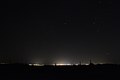 Phoenix Lights from afar
 -
 HPS lamps
 -
 Las Vegas Strip
 -
 San Tan Mountain Lights
 -
 ESO image
 -
 World light pollution
 -
 Black Marble 2017
 -
 Lichtverschmutzung in Kastelruth
 -
 Scorpion in Arizona
 -
 Birds flying trace


