Myth: Difference between revisions
CSV import |
CSV import |
||
| Line 32: | Line 32: | ||
{{stub}} | {{stub}} | ||
{{dictionary-stub1}} | {{dictionary-stub1}} | ||
<gallery> | |||
File:Hotherus_and_wood_maidens_by_Froelich.jpg|Hotherus and wood maidens by Froelich | |||
File:Francesco_Hayez_028.jpg|Francesco Hayez 028 | |||
File:Jesus-College-MS-111_00379_190r_(cropped)_Geraint.jpg|Jesus College MS 111 00379 190r (cropped) Geraint | |||
File:Myths_and_legends_of_Babylonia_and_Assyria_(1916)_(14801987593).jpg|Myths and legends of Babylonia and Assyria (1916) | |||
File:Editions_of_Hamilton's_book.png|Editions of Hamilton's book | |||
File:Bartolomeo_di_Giovanni_-_The_Myth_of_Io_-_Walters_37421.jpg|The Myth of Io by Bartolomeo di Giovanni | |||
File:Robert_Wilhelm_Ekman_-_Väinämöinen’s_Play.jpg|Väinämöinen’s Play by Robert Wilhelm Ekman | |||
File:Thor's_Battle_Against_the_Jötnar_(1872)_by_Mårten_Eskil_Winge.jpg|Thor's Battle Against the Jötnar (1872) by Mårten Eskil Winge | |||
File:Prometheus_by_Gustave_Moreau.jpg|Prometheus by Gustave Moreau | |||
File:10,000_Belgian_francs_of_1929_(cropped).jpg|10,000 Belgian francs of 1929 (cropped) | |||
</gallery> | |||
Latest revision as of 21:33, 23 February 2025
Myth
A myth is a traditional story consisting of events that are ostensibly historical, though often supernatural, explaining the origins of a cultural practice or natural phenomenon. The word "myth" is derived from the Greek word mythos (μῦθος), which simply means "story". Mythology can refer either to the study of myths, or to a body or collection of myths. Myth can mean 'sacred story', 'traditional narrative' or 'tale of the gods'. A myth can also be a story to explain why something exists.
Types of myths[edit]
Myths may be broadly divided into two types, mythologies and legends. Mythologies are often religious or spiritual in nature, often dealing with gods, goddesses, and the creation of the world. Legends are more grounded in historical fact and often contain elements of folklore and fairy tales.
Functions of myth[edit]
Myths serve several distinct functions in society. They provide a framework for understanding the world and our place in it. They help to establish social norms and values. They also provide a means of exploring the unknown and the mysterious.
Cultural variations[edit]
Different cultures have their own unique myths. Some cultures have a rich tradition of mythology, such as the Greek, Roman, and Norse mythologies. Other cultures, such as those in Africa and the Americas, have a more oral tradition of storytelling, with myths passed down through generations by word of mouth.
Interpretation of myths[edit]
The interpretation of myths has evolved over time. In ancient times, myths were often accepted as literal truth. In modern times, however, myths are often interpreted as symbolic or metaphorical narratives, reflecting deep truths about human nature and the universe.
See also[edit]
 | |
|---|---|
 |
 |
-
 Hotherus and wood maidens by Froelich
 -
 Francesco Hayez 028
 -
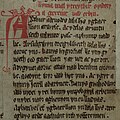 Jesus College MS 111 00379 190r (cropped) Geraint
 -
 Myths and legends of Babylonia and Assyria (1916)
 -
 Editions of Hamilton's book
 -
 The Myth of Io by Bartolomeo di Giovanni
 -
 Väinämöinen’s Play by Robert Wilhelm Ekman
 -
 Thor's Battle Against the Jötnar (1872) by Mårten Eskil Winge
 -
 Prometheus by Gustave Moreau
 -
 10,000 Belgian francs of 1929 (cropped)


_Geraint.jpg)
_(14801987593).jpg)


_by_M%C3%A5rten_Eskil_Winge.jpg)

.jpg)
