Hellebore: Difference between revisions
CSV import |
CSV import |
||
| Line 27: | Line 27: | ||
{{stub}} | {{stub}} | ||
{{dictionary-stub1}} | {{dictionary-stub1}} | ||
== Hellebore == | |||
<gallery> | |||
File:Illustration_Helleborus_niger0.jpg|Illustration Helleborus niger | |||
File:Helleborus_foetidus_re.jpg|Helleborus foetidus | |||
File:Helleborus_lividus_(23794254383).jpg|Helleborus lividus | |||
File:Helleborus_argutifolius1.jpg|Helleborus argutifolius | |||
File:Helleborus_niger_Kaiser.jpg|Helleborus niger Kaiser | |||
File:Helleborus_niger_001.JPG|Helleborus niger | |||
File:Helleborus_thibetanus1.jpg|Helleborus thibetanus | |||
File:Helleborus_atrorubens_RHS.jpeg|Helleborus atrorubens | |||
File:Helleborus_bocconei_2.jpg|Helleborus bocconei | |||
File:Helleborus_croaticus1.jpg|Helleborus croaticus | |||
File:Helleborus_cyclophyllus.jpg|Helleborus cyclophyllus | |||
File:Helleborus_dumetorum.jpg|Helleborus dumetorum | |||
</gallery> | |||
Latest revision as of 21:33, 23 February 2025
Hellebore is a type of flowering plant that belongs to the family Ranunculaceae. The term "hellebore" is derived from the Greek words "elein" meaning to injure, and "bora" meaning food, referring to the plant's toxic properties. Hellebores are native to Europe and Asia, and are commonly known for their early blooming period, often in late winter or early spring.
Description[edit]
Hellebores are perennial plants with leathery leaves and large, bowl-shaped flowers. The flowers come in a variety of colors, including white, green, pink, and purple. The plants typically grow to a height of 12 to 15 inches, and are often used in gardening for their ornamental value.
Toxicity[edit]
All parts of the hellebore plant are toxic if ingested. The plant contains several types of toxic compounds, including glycosides and alkaloids. Symptoms of hellebore poisoning can include nausea, vomiting, diarrhea, and abdominal pain. In severe cases, ingestion can lead to cardiac arrest and death.
Medical Uses[edit]
Despite its toxicity, hellebore has been used in traditional medicine for centuries. It was used by the ancient Greeks to treat mental disorders, and has also been used as a purgative. However, due to its toxic properties, hellebore is not commonly used in modern medicine.
Cultivation[edit]
Hellebores are hardy plants that can tolerate a range of conditions. They prefer shady locations and well-drained soil. Hellebores are often propagated by division in the spring or fall.
See Also[edit]
References[edit]
<references />
 | |
|---|---|
 |
 |
Hellebore[edit]
-
 Illustration Helleborus niger
 -
 Helleborus foetidus
 -
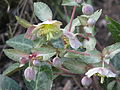 Helleborus lividus
 -
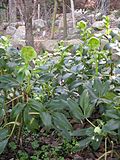 Helleborus argutifolius
 -
 Helleborus niger Kaiser
 -
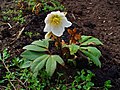 Helleborus niger
 -
 Helleborus thibetanus
 -
 Helleborus atrorubens
 -
 Helleborus bocconei
 -
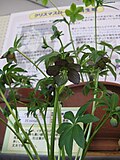 Helleborus croaticus
 -
 Helleborus cyclophyllus
 -
 Helleborus dumetorum


.jpg)


