Kiln: Difference between revisions
CSV import Tags: Manual revert mobile edit mobile web edit |
CSV import |
||
| Line 40: | Line 40: | ||
{{stub}} | {{stub}} | ||
<gallery> | |||
File:Charcoal_Kilns,_California.JPG|Charcoal Kilns, California | |||
File:Indian_brick_kiln.jpg|Indian brick kiln | |||
File:Hop_kiln.png|Hop kiln | |||
File:Denver_Anagama_Being_Fired.jpg|Denver Anagama Being Fired | |||
File:Farnham_Pottery,_Wrecclesham_-_bottle_kiln.jpg|Farnham Pottery, Wrecclesham - bottle kiln | |||
File:Firing.jpg|Firing | |||
File:L3766_-_Belleek_Pottery,_County_Fermanagh.jpg|Belleek Pottery, County Fermanagh | |||
File:Ancient_Cambodian_kiln_reconstitution.jpg|Ancient Cambodian kiln reconstitution | |||
File:1._Alt_forn_del_Port_de_Sagunt_(País_Valencià,_1951).jpg|Alt forn del Port de Sagunt (País Valencià, 1951) | |||
File:Mekong-kilns.jpg|Mekong kilns | |||
File:Wood-fired-kilns.jpg|Wood-fired kilns | |||
File:Kiln_in_Vietnam_in_Chau_Thanh_District,_12.webm|Kiln in Vietnam in Chau Thanh District | |||
</gallery> | |||
Revision as of 21:30, 23 February 2025
Kiln
A Kiln is a thermally insulated chamber, a type of oven, that produces temperatures sufficient to complete some process, such as hardening, drying, or chemical changes. Kilns have been used for millennia to turn objects made from clay into pottery, tiles and bricks. Various industries use rotary kilns for pyroprocessing—to calcinate ores, to calcinate limestone to lime for cement, and to transform many other materials.
Etymology and pronunciation
The word kiln descends from the Old English cylene circa 800 AD, which was borrowed from the Latin culīna 'kitchen, cooking-stove, burning-place.' However, there are different pronunciations depending on the region and country.
Types of kilns
Kilns are classified into three general types according to the process for which they are used:
Design
The design of a kiln is very specific to the burning process that it is intended for. Precise control over temperature, airflow, pressure, and other variables allows for the most efficient and effective processing of materials.
History
Kilns have been used by humans for thousands of years, with the earliest known kiln dating back to the early Neolithic period around 6000 BC. They have been used for a variety of purposes, including the production of pottery, bricks, and other ceramics, as well as in the processing of minerals and metals.
See also
References
<references />
 | |
|---|---|
 |
 |
-
 Charcoal Kilns, California
 -
 Indian brick kiln
 -
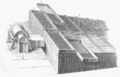 Hop kiln
 -
Denver Anagama Being Fired
-
 Farnham Pottery, Wrecclesham - bottle kiln
 -
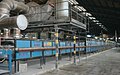 Firing
 -
 Belleek Pottery, County Fermanagh
 -
 Ancient Cambodian kiln reconstitution
 -
 Alt forn del Port de Sagunt (País Valencià, 1951)
 -
 Mekong kilns
 -
 Wood-fired kilns
 -
 Kiln in Vietnam in Chau Thanh District


.jpg)


