Ethyl carbamate: Difference between revisions
CSV import |
CSV import |
||
| Line 45: | Line 45: | ||
== Ethyl_carbamate == | == Ethyl_carbamate == | ||
<gallery> | <gallery> | ||
File:Synthesis_of_ethyl_carbamate.tif|Synthesis of ethyl carbamate | |||
File:Ethanol_urea_reaction.tif|Ethanol urea reaction | |||
</gallery> | |||
== Ethyl_carbamate == | |||
<gallery> | |||
File:Ethyl_carbamate_v2.svg|Ethyl carbamate v2 | |||
File:Ethyl_Carbamate_3D_Balls.png|Ethyl Carbamate 3D Balls | |||
File:Synthesis_of_ethyl_carbamate.tif|Synthesis of ethyl carbamate | File:Synthesis_of_ethyl_carbamate.tif|Synthesis of ethyl carbamate | ||
File:Ethanol_urea_reaction.tif|Ethanol urea reaction | File:Ethanol_urea_reaction.tif|Ethanol urea reaction | ||
</gallery> | </gallery> | ||
Revision as of 21:28, 23 February 2025
Ethyl Carbamate
Ethyl carbamate, also known as urethane, is a chemical compound with the molecular formula C2H5OC(O)NH2. It is a colorless solid that is used in various industrial applications. Ethyl carbamate is primarily produced as an intermediate in the synthesis of other chemicals, but it also has some uses in the pharmaceutical and food industries.
Chemical Properties
Ethyl carbamate is an ester of carbamic acid. It has a molecular weight of 89.09 g/mol and a melting point of 47-49 °C. It is soluble in water and organic solvents such as ethanol and acetone. Ethyl carbamate is a weak acid and can undergo hydrolysis in the presence of water.
Production
Ethyl carbamate is typically produced by the reaction of ethyl alcohol with urea. The reaction is catalyzed by an acid, such as sulfuric acid or phosphoric acid. The resulting mixture is then heated and distilled to obtain pure ethyl carbamate.
Uses
Industrial Applications
Ethyl carbamate is primarily used as an intermediate in the production of other chemicals. It is a key component in the synthesis of polyurethane foams, which are widely used in the manufacturing of furniture, mattresses, and insulation materials. It is also used in the production of synthetic fibers, adhesives, and coatings.
Pharmaceutical Applications
In the pharmaceutical industry, ethyl carbamate is used as a solvent and a stabilizer for various drugs. It is also used as a precursor in the synthesis of certain pharmaceutical compounds. However, due to its potential toxicity, the use of ethyl carbamate in pharmaceuticals is strictly regulated.
Food and Beverage Applications
Ethyl carbamate can be formed during the fermentation and aging processes of certain foods and beverages, such as bread, cheese, and alcoholic beverages. It is considered a potential carcinogen and efforts are made to minimize its formation in food production. Regulatory limits have been established to ensure the safety of these products.
Safety and Health Concerns
Ethyl carbamate is classified as a potential carcinogen by various regulatory agencies. Prolonged exposure to high levels of ethyl carbamate can increase the risk of cancer, particularly liver and lung cancer. Therefore, strict regulations and guidelines are in place to limit its presence in consumer products.
References
<references />
See Also
Ethyl_carbamate
-
 Synthesis of ethyl carbamate
 -
 Ethanol urea reaction
Ethyl_carbamate
-
 Ethyl carbamate v2
 -
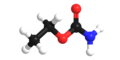 Ethyl Carbamate 3D Balls
 -
Synthesis of ethyl carbamate
-
Ethanol urea reaction


