Bispecific monoclonal antibody: Difference between revisions
No edit summary |
CSV import |
||
| Line 28: | Line 28: | ||
[[Category:Biotechnology]] | [[Category:Biotechnology]] | ||
{{Immunology-stub}} | {{Immunology-stub}} | ||
== Bispecific_monoclonal_antibody == | |||
<gallery> | |||
File:Engineered_monoclonal_antibodies.svg|Engineered monoclonal antibodies | |||
File:DVD-Ig_Knob_in_Hole.png|DVD-Ig Knob in Hole | |||
File:Catumaxomab_mechanism.svg|Catumaxomab mechanism | |||
File:T-cell_killing_cancer_cell.gif|T-cell killing cancer cell | |||
</gallery> | |||
Latest revision as of 21:22, 23 February 2025
Bispecific monoclonal antibody (BsMAb) refers to an artificial protein that can simultaneously bind to two different types of antigen. BsMAbs are engineered to engage multiple targets at once, which can enhance their therapeutic effect compared to traditional monoclonal antibodies.
History[edit]
The concept of bispecific monoclonal antibodies was first introduced in the 1980s. The initial methods of production were complex and yielded low amounts of BsMAbs. However, with the advent of modern genetic engineering techniques, the production of BsMAbs has become more efficient and reliable.
Structure and Function[edit]
BsMAbs are composed of two different antibody fragments fused together. Each fragment is specific to a different antigen, allowing the BsMAb to bind to two different targets simultaneously. This dual targeting capability can enhance the therapeutic effect of the antibody, as it can engage multiple disease-related targets at once.
Therapeutic Applications[edit]
BsMAbs have a wide range of therapeutic applications, particularly in the field of oncology. They can be used to direct immune cells towards cancer cells, enhance the delivery of drugs to tumor sites, and block multiple signaling pathways that contribute to cancer progression. BsMAbs are also being explored for their potential in treating autoimmune diseases and infectious diseases.
Challenges and Future Directions[edit]
Despite their potential, the development and use of BsMAbs face several challenges. These include the complexity of their design and production, potential for increased toxicity due to dual targeting, and the need for further research to fully understand their mechanisms of action. However, ongoing advancements in antibody engineering and our understanding of disease biology continue to drive the development of more effective and safer BsMAbs.
See Also[edit]

This article is a immunology stub. You can help WikiMD by expanding it!
Bispecific_monoclonal_antibody[edit]
-
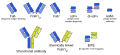 Engineered monoclonal antibodies
 -
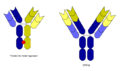 DVD-Ig Knob in Hole
 -
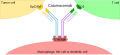 Catumaxomab mechanism
 -
 T-cell killing cancer cell


