Insect: Difference between revisions
CSV import |
CSV import |
||
| Line 28: | Line 28: | ||
{{stub}} | {{stub}} | ||
{{dictionary-stub1}} | {{dictionary-stub1}} | ||
<gallery> | |||
File:Insects_-_Neoptera_-_Paleoptera_-_Apterygota.jpg|Insects - Neoptera - Paleoptera - Apterygota | |||
File:Insect_world_of_motion.webm|Insect world of motion | |||
File:Gemeine_Heidelibelle_(Sympetrum_vulgatum)_4_(cropped).jpg|Gemeine Heidelibelle (Sympetrum vulgatum) | |||
File:Wolfsspinne_Trochosa_Rose-20190905-RM-081613_(cropped).jpg|Wolfsspinne Trochosa | |||
File:Armadillidium_vulgare_001.jpg|Armadillidium vulgare | |||
File:Scolopendra_viridicornis_nigra_(cropped).jpg|Scolopendra viridicornis nigra | |||
File:Milli's_on_the_back_(cropped).jpg|Milli's on the back | |||
File:Eukaryote_species_pie_tree.png|Eukaryote species pie tree | |||
File:Palomena_prasina_MHNT_Léguevin_Blanc.jpg|Palomena prasina | |||
File:Peacock_butterfly_(Aglais_io)_2.jpg|Peacock butterfly (Aglais io) | |||
File:Asilidae_by_kadavoor.jpg|Asilidae by kadavoor | |||
File:Specimen_of_Podalonia_tydei_(Le_Guillou,_1841)_(cropped).jpg|Specimen of Podalonia tydei (Le Guillou, 1841) | |||
</gallery> | |||
Latest revision as of 21:15, 23 February 2025
Insects are a group of arthropods that are characterized by their three-part bodies, three pairs of jointed legs, compound eyes, and one pair of antennae. They are the most diverse group of animals on the planet, including more than a million described species and representing more than half of all known living organisms.
Classification[edit]
Insects are classified in the taxonomic class Insecta, and are further divided into 30 orders. These orders include Coleoptera (beetles), Diptera (flies), Lepidoptera (butterflies and moths), and Hymenoptera (ants, bees, and wasps), among others.
Anatomy[edit]
Insects have a highly differentiated body, divided into three main parts: the head, the thorax, and the abdomen. The head supports a pair of sensory antennae, a pair of compound eyes, and mouthparts. The thorax is specialized for locomotion, bearing three pairs of legs and usually one or two pairs of wings. The abdomen is adapted for digestion and reproduction.
Life Cycle[edit]
Insects typically undergo a process of metamorphosis, which is a series of physical transformations after birth. There are two types of metamorphosis: incomplete metamorphosis, where the insect grows by shedding its skin, and complete metamorphosis, where the insect goes through four distinct stages: egg, larva, pupa, and adult.
Role in Ecosystem[edit]
Insects play crucial roles in various ecosystems as pollinators, recyclers of nutrients, scavengers, and as a part of the food chain. They are also known to be vectors for diseases, and some species are significant pests for agriculture.
Human Interaction[edit]
Humans interact with insects in a variety of ways, not all of them beneficial. Insects can act as disease vectors, carrying pathogens that can infect humans. However, they also play a crucial role in pollination, which is vital for food production.
See Also[edit]
 | |
|---|---|
 |
 |
-
 Insects - Neoptera - Paleoptera - Apterygota
 -
 Insect world of motion
 -
 Gemeine Heidelibelle (Sympetrum vulgatum)
 -
 Wolfsspinne Trochosa
 -
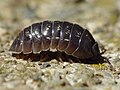 Armadillidium vulgare
 -
 Scolopendra viridicornis nigra
 -
 Milli's on the back
 -
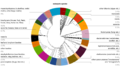 Eukaryote species pie tree
 -
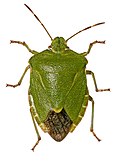 Palomena prasina
 -
 Peacock butterfly (Aglais io)
 -
 Asilidae by kadavoor
 -
 Specimen of Podalonia tydei (Le Guillou, 1841)

_4_(cropped).jpg)
.jpg)

.jpg)
.jpg)


_2.jpg)

_(cropped).jpg)
