Molecular switch: Difference between revisions
CSV import |
CSV import Tags: mobile edit mobile web edit |
||
| Line 38: | Line 38: | ||
{{Molecular-biology-stub}} | {{Molecular-biology-stub}} | ||
{{Biotech-stub}} | {{Biotech-stub}} | ||
== Molecular_switch == | |||
<gallery> | |||
File:Stimuli_for_molecular_switches.tif|Stimuli for molecular switches | |||
File:Dithienylethene.svg|Dithienylethene | |||
File:HinderedAlkeneMolecularSwitch.png|Hindered Alkene Molecular Switch | |||
File:TBu_Helicenemolecularmotor.png|TBu Helicene molecular motor | |||
File:AnthraceneCrownDesvergne1978.png|Anthracene Crown Desvergne 1978 | |||
File:AnthraceneCrownMisumi1980.png|Anthracene Crown Misumi 1980 | |||
File:MolecularSwitchShinkay1980.png|Molecular Switch Shinkay 1980 | |||
File:PhotoswitchableCatenane.svg|Photoswitchable Catenane | |||
File:MolSwitchStoddart1994.png|Mol Switch Stoddart 1994 | |||
File:MolecularSwitchInElectronicmemory.png|Molecular Switch In Electronic memory | |||
</gallery> | |||
Latest revision as of 21:13, 23 February 2025
Molecular Switch
A molecular switch is a molecule that can be reversibly shifted between two or more stable states. The molecules may be shifted between these states by the application of an external stimulus, such as a change in pH, light, temperature, an electric field, or the presence of a specific ligand. Molecular switches are often used in nanotechnology and molecular electronics.
Mechanism[edit]
The mechanism of a molecular switch involves the molecule changing its structure in response to a stimulus. This change in structure alters the properties of the molecule, allowing it to perform a specific function. For example, in a photochromic molecular switch, the molecule changes its structure in response to light, allowing it to absorb different wavelengths of light and change color.
Types of Molecular Switches[edit]
There are several types of molecular switches, including:
- Photochromic switches: These switches change their structure in response to light. They are often used in optical storage devices and photosensors.
- Thermochromic switches: These switches change their structure in response to changes in temperature. They are often used in thermometers and thermal imaging devices.
- pH-sensitive switches: These switches change their structure in response to changes in pH. They are often used in biosensors and drug delivery systems.
- Electrochromic switches: These switches change their structure in response to an electric field. They are often used in electrochromic displays and smart windows.
Applications[edit]
Molecular switches have a wide range of applications in various fields, including nanotechnology, molecular electronics, biotechnology, and medicine. They can be used to create smart materials, biosensors, drug delivery systems, and molecular machines. In medicine, molecular switches are being explored for use in targeted drug delivery, where the switch would release a drug only in response to a specific stimulus, such as the presence of a specific disease marker.
See Also[edit]


This article is a molecular biology stub. You can help WikiMD by expanding it!

This article is a biotechnology stub. You can help WikiMD by expanding it!
Molecular_switch[edit]
-
 Stimuli for molecular switches
 -
 Dithienylethene
 -
 Hindered Alkene Molecular Switch
 -
 TBu Helicene molecular motor
 -
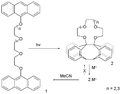 Anthracene Crown Desvergne 1978
 -
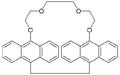 Anthracene Crown Misumi 1980
 -
 Molecular Switch Shinkay 1980
 -
 Photoswitchable Catenane
 -
 Mol Switch Stoddart 1994
 -
 Molecular Switch In Electronic memory


