Quadratus lumborum muscle: Difference between revisions
CSV import Tags: mobile edit mobile web edit |
CSV import |
||
| Line 28: | Line 28: | ||
[[Category:Anatomy]] | [[Category:Anatomy]] | ||
{{Medicine-stub}} | {{Medicine-stub}} | ||
== Quadratus lumborum muscle == | |||
<gallery> | |||
File:Quadratuslumborum.png|Quadratus lumborum | |||
File:Gray388.png|Gray's Anatomy illustration of the quadratus lumborum | |||
</gallery> | |||
Latest revision as of 21:13, 23 February 2025
Quadratus Lumborum Muscle
The Quadratus Lumborum (QL) is a crucial muscle located in the lower back on either side of the lumbar spine. It stretches from the iliac crest at the top of the pelvis to the lower border of the twelfth rib and onto the transverse processes of the upper four lumbar vertebrae. This muscle plays a significant role in stabilizing the pelvis and spine, assisting in lateral flexion of the vertebral column, and aiding in respiration by fixing the twelfth rib during inspiration.
Anatomy[edit]
The Quadratus Lumborum is a deep muscle that is part of the posterior abdominal wall. It is bordered anteriorly by the psoas major muscle, medially by the vertebrae, and posteriorly by the erector spinae muscles. The QL is divided into three parts based on its points of attachment: the iliolumbar, the lumbocostal, and the lateral lumbocostal. Each part contributes to the muscle's overall function but may be targeted differently depending on the movement or exercise.
Function[edit]
The primary function of the Quadratus Lumborum is to stabilize the lumbar spine and the pelvis. It also aids in lateral bending of the spine (lateral flexion) and helps in extending the lower back when both sides of the muscle work together. Additionally, the QL plays a role in forced expiration by stabilizing the lower rib cage.
Clinical Significance[edit]
Pain and dysfunction in the Quadratus Lumborum can lead to lower back pain, which is a common complaint among adults. This condition is often referred to as "QL Syndrome" and can result from overuse, strain, or injury to the muscle. Symptoms may include pain in the lower back, hips, and buttocks, often exacerbated by standing for long periods or performing activities that involve bending or twisting.
Treatment and Management[edit]
Treatment for Quadratus Lumborum pain typically involves rest, ice, and anti-inflammatory medications to reduce pain and swelling. Physical therapy exercises aimed at stretching and strengthening the QL and surrounding muscles can also be beneficial. In some cases, massage therapy or trigger point therapy may be recommended to relieve muscle tension.
Prevention[edit]
Preventative measures for Quadratus Lumborum pain include maintaining good posture, engaging in regular physical activity to strengthen the core and back muscles, and using proper techniques when lifting heavy objects. Additionally, incorporating flexibility exercises into one's routine can help prevent muscle tightness and imbalance.
See Also[edit]
 | This medical article is a stub. You can help Wikipedia by adding missing information. |
Quadratus lumborum muscle[edit]
-
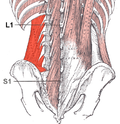 Quadratus lumborum
 -
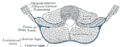 Gray's Anatomy illustration of the quadratus lumborum


