Habitat fragmentation: Difference between revisions
From WikiMD's Wellness Encyclopedia
CSV import |
CSV import |
||
| Line 32: | Line 32: | ||
{{Environment-stub}} | {{Environment-stub}} | ||
<gallery> | |||
File:Grasp_africa-vi.png|Grasp Africa | |||
File:Deforestation_central_Europe_-_Rodungen_Mitteleuropa.jpg|Deforestation Central Europe | |||
File:Sugarcane_Deforestation,_Bolivia,_2016-06-15_by_Planet_Labs.jpg|Sugarcane Deforestation, Bolivia | |||
File:Indiana_Dunes_Habitat_Fragmentation.jpg|Indiana Dunes Habitat Fragmentation | |||
File:Macquarie_perch.jpg|Macquarie Perch | |||
</gallery> | |||
Latest revision as of 21:04, 23 February 2025
Habitat fragmentation is a process by which large and contiguous habitats are divided into smaller, isolated patches, often as a result of human activities such as agriculture, urban development, and logging. This division of habitats can have profound effects on the biodiversity within an ecosystem, often leading to a decrease in species richness and an increase in species extinction rates.
Causes[edit]
The primary causes of habitat fragmentation include:
- Agricultural Expansion: The conversion of forests and other natural habitats into agricultural lands reduces large ecosystems into smaller fragments.
- Urban Development: The growth of cities and suburban areas consumes vast amounts of natural land, isolating ecosystems from one another.
- Logging and Deforestation: Selective logging and clear-cutting forests for timber and paper products break up large forested areas.
- Infrastructure Development: The construction of roads, highways, and railways physically divides habitats and can limit the movement of species.
Effects[edit]
Habitat fragmentation has several ecological effects:
- Edge Effects: The creation of edges around fragments can alter the conditions within a habitat, often making them inhospitable for some species.
- Isolation of Populations: Smaller, isolated populations are more vulnerable to extinction due to inbreeding, reduced genetic diversity, and increased sensitivity to stochastic events.
- Altered Species Interactions: Fragmentation can disrupt the interactions between species, such as predation, competition, and pollination, leading to further declines in biodiversity.
Conservation Strategies[edit]
To mitigate the effects of habitat fragmentation, several conservation strategies can be employed:
- Establishing Corridors: Creating corridors between habitat fragments can facilitate the movement of species and genetic flow between populations.
- Protected Areas: Designating areas as protected can prevent further fragmentation and provide refuges for wildlife.
- Sustainable Land Use Practices: Implementing sustainable agriculture, forestry, and urban planning can reduce the impact of human activities on natural habitats.
See Also[edit]

This article is a environment-related stub. You can help WikiMD by expanding it!
-
 Grasp Africa
 -
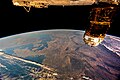 Deforestation Central Europe
 -
 Sugarcane Deforestation, Bolivia
 -
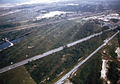 Indiana Dunes Habitat Fragmentation
 -
 Macquarie Perch


