Harmful algal bloom: Difference between revisions
CSV import Tags: mobile edit mobile web edit |
CSV import |
||
| Line 48: | Line 48: | ||
{{medicine-stub}} | {{medicine-stub}} | ||
== Harmful_algal_bloom == | |||
<gallery> | |||
File:Blue-gree_algae_bloom_Lake_Erie.png|Blue-green algae bloom Lake Erie | |||
File:Banter_See_1348.jpg|Banter See 1348 | |||
File:Karenia_brevis_Anatomy_(1).png|Karenia brevis Anatomy | |||
File:La-Jolla-Red-Tide.780.jpg|La Jolla Red Tide | |||
File:Nonvisible_cyanobacteria_HAB.png|Nonvisible cyanobacteria HAB | |||
File:Red_tide.jpg|Red tide | |||
File:Aerosolization_of_toxins_from_HABs.png|Aerosolization of toxins from HABs | |||
File:Toxic_Algae_Bloom_in_Lake_Erie.jpg|Toxic Algae Bloom in Lake Erie | |||
File:Scientists_discover_under-ice_phytoplankton_bloom_1.ogv|Scientists discover under-ice phytoplankton bloom 1 | |||
File:Scientists_discover_under-ice_phytoplankton_bloom_2.ogv|Scientists discover under-ice phytoplankton bloom 2 | |||
File:Dead_whale_NOAA.jpg|Dead whale NOAA | |||
File:Gulf_dead_zone.jpg|Gulf dead zone | |||
</gallery> | |||
Latest revision as of 20:59, 23 February 2025
Harmful Algal Bloom (HAB) refers to the rapid growth of algae in water systems, which can produce toxins harmful to humans, animals, and the environment. These blooms can occur in both freshwater and marine environments and are often associated with nutrient pollution from human activities such as agriculture and wastewater treatment. HABs can cause a range of negative impacts, including the death of aquatic life due to oxygen depletion, human illnesses from consuming contaminated water or seafood, and economic losses to fisheries and tourism industries.
Causes[edit]
Harmful algal blooms are primarily caused by an excess of nutrients (nitrogen and phosphorus) in water bodies. These nutrients can come from a variety of sources, including:
- Agricultural runoff
- Wastewater discharge
- Industrial effluents
- Stormwater runoff
Other factors that can contribute to the development of HABs include warm water temperatures, stagnant water conditions, and changes in water flow or circulation patterns.
Types of Harmful Algae[edit]
Several types of algae can cause HABs, each producing different toxins that can affect animals, humans, and the ecosystem in various ways. Some of the most common include:
- Cyanobacteria (also known as blue-green algae), which can produce toxins such as microcystins and anatoxins.
- Dinoflagellates, which can cause red tides and produce toxins like saxitoxin, responsible for paralytic shellfish poisoning.
- Diatoms, which can produce domoic acid, leading to amnesic shellfish poisoning.
Impacts[edit]
Harmful algal blooms can have significant ecological, health, and economic impacts, including:
- Ecological impacts: Loss of aquatic life due to oxygen depletion (hypoxia), changes in aquatic ecosystems, and harm to coral reefs.
- Health impacts: Illnesses in humans and animals from exposure to toxins, including respiratory issues, liver damage, and neurological effects.
- Economic impacts: Losses in fisheries, aquaculture, and tourism industries; increased costs for drinking water treatment and health care.
Prevention and Management[edit]
Managing and preventing HABs involves reducing nutrient pollution and monitoring water bodies for early detection of blooms. Strategies include:
- Implementing best management practices in agriculture to reduce runoff.
- Upgrading wastewater treatment facilities to remove more nutrients.
- Restoring wetlands and creating buffer zones to filter nutrients.
- Monitoring water quality and implementing early warning systems.
Research and Monitoring[edit]
Ongoing research and monitoring are crucial for understanding HABs and developing effective management strategies. Efforts include studying the effects of climate change on HAB frequency and severity, developing new technologies for detecting and mitigating blooms, and improving models to predict when and where HABs will occur.
See Also[edit]

This article is a environment-related stub. You can help WikiMD by expanding it!
External Links[edit]
- Environmental Protection Agency - Harmful Algal Blooms
- World Health Organization - Cyanobacterial toxins

Harmful_algal_bloom[edit]
-
 Blue-green algae bloom Lake Erie
 -
 Banter See 1348
 -
 Karenia brevis Anatomy
 -
 La Jolla Red Tide
 -
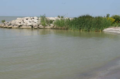 Nonvisible cyanobacteria HAB
 -
 Red tide
 -
 Aerosolization of toxins from HABs
 -
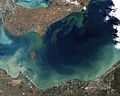 Toxic Algae Bloom in Lake Erie
 -
 Scientists discover under-ice phytoplankton bloom 1
 -
 Scientists discover under-ice phytoplankton bloom 2
 -
 Dead whale NOAA
 -
 Gulf dead zone


.png)


