Pipette: Difference between revisions
From WikiMD's Wellness Encyclopedia
No edit summary |
|||
| Line 1: | Line 1: | ||
{{Short description|A laboratory tool used to transport a measured volume of liquid}} | {{Short description|A laboratory tool used to transport a measured volume of liquid}} | ||
[[File:early_pipette.jpg|Pipette|thumb]] | |||
A '''pipette''' is a laboratory tool commonly used in chemistry, biology and medicine to transport a measured volume of liquid, often as a media dispenser. Pipettes come in several designs for various purposes with differing levels of accuracy and precision. | |||
[[File:Pipette_gallery.jpg|Pipette|thumb]] | |||
==Types of Pipettes== | |||
There are several different types of pipettes, including: | |||
* '''[[Volumetric Pipette]]''': These pipettes deliver one specific volume of liquid and are designed for great precision. They are typically used in quantitative labs, especially for preparing solutions and standardizing chemicals. | |||
* '''[[Graduated Pipette]]''': These pipettes have a scale along the side allowing variable amounts of liquid to be delivered. They are less accurate than volumetric pipettes. | |||
[[ | |||
* '''[[Micropipette]]''': These are used to transfer small quantities of liquid. They are often used in molecular biology, biochemistry, and medical tests. | |||
* '''[[Pasteur Pipette]]''': These are simple plastic or glass tubes that have a narrow tip on one end and a rubber bulb on the other. They can be used to transfer or mix a variety of liquids. | |||
=== | ==Usage== | ||
Pipettes are used in a variety of scientific disciplines, including chemistry, biology, and medicine. They are essential tools in the laboratory for the precise and accurate measurement and transfer of liquid volumes. | |||
== Gallery == | |||
<gallery> | |||
File:Single_channel_rack.jpg|Pipette | |||
File:P5000_pipette.jpg|Pipette | |||
File:P1000_pipette.jpg|Pipette | |||
File:Pipette_tips-different_1.jpg|Pipette | |||
File:Air-displacement_electronic_pipette_with_maximim_volume_of_10mL.jpeg|Pipette | |||
File:VIAFLO-electronic-pipettes.jpg|Pipette | |||
File:Positive_displacement_pipette.jpg|Pipette | |||
File:Pos_pipette_showing_grappler.jpg|Pipette | |||
File:Vollpipetten.jpg|Pipette | |||
File:2Pipettierhilfen.jpg|Pipette | |||
File:Pipetteerballon.png|Pipette | |||
File:Pipettier-Hilfe.jpg|Pipette | |||
File:Motorized_pipetter_blue.jpg|Pipette | |||
File:Pasteur_Pipets.jpg|Pipette | |||
File:Plastic_Pasteur_pipette.jpg|Pipette | |||
File:Combustion_pipette.jpg|Pipette | |||
File:Carlsberg_micropipettes.jpg|Pipette | |||
File:pulled_pipette.jpg|Pipette | |||
File:Automated_pipetting_system_using_manual_pipettes.jpg|Pipette | |||
File:DNA_biochemistry_(5912370383).jpg|Pipette | |||
File:Smart_pipette_stand.jpg|Pipette | |||
</gallery> | |||
==See Also== | |||
* [[Laboratory equipment]] | |||
* [[Volumetric flask]] | |||
* [[Burette]] | * [[Burette]] | ||
* [[ | * [[Test tube]] | ||
[[Category:Laboratory equipment]] | [[Category:Laboratory equipment]] | ||
[[Category:Volumetric instruments]] | |||
[[Category:Glassware]] | |||
[[Category:Plastic objects]] | |||
[[Category:Scientific techniques]] | |||
Revision as of 20:47, 22 February 2025
A laboratory tool used to transport a measured volume of liquid

A pipette is a laboratory tool commonly used in chemistry, biology and medicine to transport a measured volume of liquid, often as a media dispenser. Pipettes come in several designs for various purposes with differing levels of accuracy and precision.

Types of Pipettes
There are several different types of pipettes, including:
- Volumetric Pipette: These pipettes deliver one specific volume of liquid and are designed for great precision. They are typically used in quantitative labs, especially for preparing solutions and standardizing chemicals.
- Graduated Pipette: These pipettes have a scale along the side allowing variable amounts of liquid to be delivered. They are less accurate than volumetric pipettes.
- Micropipette: These are used to transfer small quantities of liquid. They are often used in molecular biology, biochemistry, and medical tests.
- Pasteur Pipette: These are simple plastic or glass tubes that have a narrow tip on one end and a rubber bulb on the other. They can be used to transfer or mix a variety of liquids.
Usage
Pipettes are used in a variety of scientific disciplines, including chemistry, biology, and medicine. They are essential tools in the laboratory for the precise and accurate measurement and transfer of liquid volumes.
Gallery
-
 Pipette
 -
 Pipette
 -
 Pipette
 -
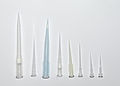 Pipette
 -
 Pipette
 -
 Pipette
 -
 Pipette
 -
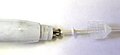 Pipette
 -
 Pipette
 -
 Pipette
 -
 Pipette
 -
 Pipette
 -
 Pipette
 -
 Pipette
 -
 Pipette
 -
 Pipette
 -
 Pipette
 -
Pipette
-
 Pipette
 -
 Pipette
 -
 Pipette


.jpg)


