Sate bandeng: Difference between revisions
CSV import Tags: mobile edit mobile web edit |
CSV import |
||
| Line 24: | Line 24: | ||
{{Indonesia-cuisine-stub}} | {{Indonesia-cuisine-stub}} | ||
{{food-stub}} | {{food-stub}} | ||
<gallery> | |||
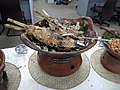
File:Sate_Bandeng_2.jpg|Sate Bandeng | |||
</gallery> | |||
Latest revision as of 21:43, 20 February 2025
Sate Bandeng is a traditional Indonesian dish, specifically originating from the Banten province. It is a type of sate or satay, which is a dish of skewered and grilled meats, served with a sauce. Sate Bandeng is unique due to its main ingredient, bandeng or milkfish, which is not commonly used in other types of sate.
History[edit]
The dish is believed to have originated in the Banten province, which is located on the westernmost end of the island of Java. The region is known for its rich culinary tradition, with Sate Bandeng being one of its most famous dishes. The use of milkfish is a reflection of Banten's coastal location and its abundant marine resources.
Preparation[edit]
The preparation of Sate Bandeng involves several steps. First, the milkfish is deboned and its flesh is ground into a paste. This paste is then mixed with a variety of spices, including turmeric, garlic, and coriander. The mixture is then wrapped around bamboo skewers and grilled over charcoal. The dish is typically served with a spicy peanut sauce and a side of lontong, a type of rice cake.
Cultural Significance[edit]
Sate Bandeng is not just a popular dish in Banten, but it also holds cultural significance. It is often served during special occasions and celebrations, such as weddings and religious festivals. The dish is also a popular street food and is commonly sold by vendors in markets and on the streets of Banten.
See Also[edit]

This article is a Indonesian cuisine-related stub. You can help WikiMD by expanding it!

-
 Sate Bandeng

