Maryland Cookies: Difference between revisions
CSV import |
CSV import |
||
| Line 38: | Line 38: | ||
* [https://www.marylandcookies.co.uk/ Official Maryland Cookies Website] | * [https://www.marylandcookies.co.uk/ Official Maryland Cookies Website] | ||
{{dictionary-stub1}} | {{dictionary-stub1}} | ||
<gallery> | |||
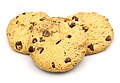
File:Maryland_cookies_choc_chip.JPG|Maryland cookies choc chip | |||
</gallery> | |||
Revision as of 21:26, 20 February 2025
Maryland Cookies
Maryland Cookies are a popular brand of cookies, or biscuits as they are known in the United Kingdom, where they are produced. They are well-known for their distinctive taste and texture, which is a combination of a traditional cookie dough with a generous amount of chocolate chips.
History
Maryland Cookies were first introduced in the United Kingdom in the 1950s by the Burton's Biscuit Company. The company was founded in 1935 and has since become one of the largest biscuit manufacturers in the UK. The name "Maryland" is actually derived from the U.S. state of Maryland, which is known for its rich tradition of cookie baking.
Varieties
There are several varieties of Maryland Cookies available. The original and most popular is the Chocolate Chip variety, which contains a generous amount of chocolate chips. Other varieties include Double Chocolate Chip, Hazel Nut, and Fruit and Oat, each offering a unique twist on the classic Maryland Cookie recipe.
Production
The production of Maryland Cookies involves a process that has been refined over the years to ensure the highest quality. The dough is made from a mixture of flour, sugar, and fat, along with chocolate chips. This mixture is then baked until it reaches the perfect level of crispness.
Popularity
Maryland Cookies are incredibly popular in the United Kingdom, where they are one of the best-selling cookies. They are also exported to several other countries, including the United States, where they have gained a loyal following.
Nutritional Information
Like most cookies, Maryland Cookies are high in sugar and fat, which contributes to their delicious taste. However, they also contain a small amount of protein and fiber, making them a slightly more nutritious option than some other types of cookies.
See Also
References
External Links

-
 Maryland cookies choc chip

