Mucuna: Difference between revisions
CSV import |
CSV import |
||
| Line 33: | Line 33: | ||
{{botany-stub}} | {{botany-stub}} | ||
<gallery> | |||
File:Starr 021203-0008 Mucuna gigantea.jpg|Mucuna gigantea | |||
File:Mucuna poggei MS 3655.jpg|Mucuna poggei | |||
File:Mucuna birdwoodiana.jpg|Mucuna birdwoodiana | |||
File:Dolichos urens Ypey25.jpg|Dolichos urens | |||
File:Mucuna urens.jpg|Mucuna urens | |||
File:Hamburger Seed.jpg|Hamburger Seed | |||
File:Mucuna urens MHNT.BOT.2009.16.6.jpg|Mucuna urens | |||
</gallery> | |||
Latest revision as of 01:38, 20 February 2025


Mucuna is a genus of around 100 accepted species of climbing plants and shrubs of the family Fabaceae, native to tropical and subtropical regions of Africa, India, and the Caribbean. The genus is notable for its striking flowers and the presence of L-DOPA, a precursor to the neurotransmitters dopamine, norepinephrine (noradrenaline), and epinephrine (adrenaline) in its seeds. Mucuna species are used in agriculture, horticulture, and traditional medicine across various cultures.
Description[edit]
Mucuna plants are characterized by their climbing habit, often using other vegetation for support. They have compound leaves with three leaflets and produce dense clusters of flowers, which can be white, purple, or pink, depending on the species. The fruit is a legume, typically hairy, that opens by splitting when mature, revealing seeds that vary in color from black to brown or white.
Ecology[edit]
Mucuna species play a significant role in their ecosystems. They are important for soil conservation due to their climbing and ground-cover habits, which help prevent soil erosion. Additionally, their flowers are a source of nectar for various pollinators, including bees and butterflies.
Uses[edit]
- Agricultural and Horticultural Uses
Mucuna species are used in agriculture as cover crops and green manure, improving soil fertility and structure. They are also popular in tropical gardens for their ornamental value, with their attractive flowers and foliage.
- Medicinal Uses
The seeds of some Mucuna species, particularly Mucuna pruriens, contain significant amounts of L-DOPA, an important drug in the treatment of Parkinson's disease. Traditional medicine systems, such as Ayurveda in India, have used Mucuna seeds for centuries to treat various ailments, including Parkinson's disease, nervous disorders, and as an aphrodisiac.
Species[edit]
Some notable species within the Mucuna genus include:
- Mucuna pruriens (commonly known as velvet bean or cowitch)
- Mucuna gigantea (beach bean)
- Mucuna sloanei
- Mucuna novo-guineensis
- Mucuna warburgii
Conservation[edit]
While some Mucuna species are widespread and not considered at risk, others are threatened by habitat destruction and overharvesting, particularly those with medicinal value like Mucuna pruriens. Conservation efforts are necessary to ensure the survival of these species in their natural habitats.
Cultural Significance[edit]
In addition to their medicinal and agricultural uses, Mucuna species have cultural significance in various regions. For example, the seeds of Mucuna pruriens are used in traditional ceremonies and as talismans in some cultures.

-
 Mucuna gigantea
 -
 Mucuna poggei
 -
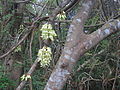 Mucuna birdwoodiana
 -
 Dolichos urens
 -
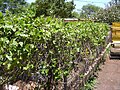 Mucuna urens
 -
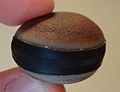 Hamburger Seed
 -
 Mucuna urens

