Mekitsa: Difference between revisions
CSV import |
CSV import |
||
| Line 26: | Line 26: | ||
[[Category:Fried dough foods]] | [[Category:Fried dough foods]] | ||
{{food-stub}} | {{food-stub}} | ||
<gallery> | |||
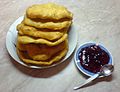
File:Mekici and jam.JPG|Mekitsa | |||
</gallery> | |||
Revision as of 01:24, 20 February 2025
Mekitsa (Bulgarian: мекица) is a traditional Bulgarian dish that is typically consumed for breakfast. It is a type of fried dough that is similar to the American doughnut, but without the hole in the middle. Mekitsa is often served with jam, honey, feta cheese, or yogurt.
History
The origins of Mekitsa are believed to date back to the Bulgarian Empire, making it a dish with a long-standing history in Bulgarian culture. It is a staple in Bulgarian cuisine and is often served at traditional Bulgarian breakfasts.
Preparation
Mekitsa is made by kneading a dough made of flour, eggs, yogurt, a leavening agent, water, salt, and sometimes a bit of vinegar or brandy. The dough is then divided into small portions, which are individually rolled out and fried in hot oil. The result is a fluffy, golden brown pastry that is crispy on the outside and soft on the inside.
Serving
Mekitsa is traditionally served warm and is often accompanied by a variety of toppings. The most common toppings include jam, honey, feta cheese, and yogurt. However, it can also be served with savory toppings such as cheese or meat.
Cultural Significance
Mekitsa holds a significant place in Bulgarian culture. It is often served at family gatherings, holidays, and other special occasions. In addition, it is a common street food in Bulgaria, and can be found at many outdoor markets and food stalls.
See Also

-
 Mekitsa

