Ragout: Difference between revisions
CSV import |
CSV import |
||
| Line 32: | Line 32: | ||
{{Cuisine-stub}} | {{Cuisine-stub}} | ||
== Ragout == | |||
<gallery> | |||
File:Ragoût aux lentilles.jpg|Ragoût aux lentilles | |||
File:Ragout-01.jpg|Ragout | |||
</gallery> | |||
Latest revision as of 01:22, 20 February 2025
Ragout is a hearty, slow-cooked stew of meat, poultry, fish, or vegetables, seasoned with a rich mix of spices and herbs, and often thickened with flour, cornstarch, or cream. Originating from the French culinary tradition, the term ragout (from ragoûter, meaning "to revive the taste") is indicative of its purpose to delight the palate. This dish is versatile, with variations found across different cultures, each adding its unique ingredients and cooking methods to the basic concept of a ragout.
History[edit]
The history of ragout can be traced back to the early 17th century in France, where it was developed as a method to cook tough cuts of meat slowly until tender. Over time, the dish evolved, incorporating a variety of ingredients and flavors as it spread across Europe and other parts of the world. Each region adapted the dish to its local ingredients and culinary traditions, leading to a wide array of ragouts.
Ingredients and Preparation[edit]
A traditional ragout includes a base of meat such as beef, lamb, pork, chicken, or game, though fish and vegetarian versions are also popular. The meat is typically cut into bite-sized pieces and browned before being cooked slowly in a flavorful liquid. This liquid can be a combination of stock, wine, or tomatoes, enriched with onions, garlic, and a bouquet garni of herbs like thyme, bay leaves, and parsley.
Vegetables play a crucial role in ragout, with carrots, celery, and mushrooms being common additions. The choice of vegetables can vary, allowing for seasonal and regional variations. The slow cooking process melds the flavors together, creating a rich and comforting dish.
Cultural Variations[edit]
- French Ragout: Often includes a mix of meats and is thickened with a roux, serving as a testament to the dish's origins.
- Italian Ragout: Known as ragù in Italy, this version is a meat-based sauce, commonly served with pasta. The most famous variations are Ragù alla Bolognese and Ragù alla Napoletana.
- Hungarian Ragout: Incorporates paprika and other spices, reflecting Hungary's culinary traditions.
- North African Ragout: Features lamb or mutton and a variety of spices such as cumin and cinnamon, showcasing the region's spice palate.
Serving[edit]
Ragout is typically served as a main dish, often accompanied by starches such as potatoes, rice, or pasta, which complement its rich flavors. Bread is also a common accompaniment, used to soak up the flavorful sauce.
Nutritional Information[edit]
The nutritional content of ragout varies widely depending on the ingredients used. Meat-based ragouts are a good source of protein, while the variety of vegetables can provide essential vitamins and minerals. However, the dish can be high in fat and calories, especially if made with richer cuts of meat and additional thickening agents.
See Also[edit]

Ragout[edit]
-
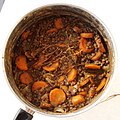 Ragoût aux lentilles
 -
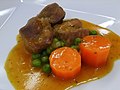 Ragout


