Samsung: Difference between revisions
CSV import |
CSV import |
||
| Line 30: | Line 30: | ||
[[Category:Samsung]] | [[Category:Samsung]] | ||
{{stub}} | {{stub}} | ||
<gallery> | |||
File:Samsung Black icon.svg|Samsung | |||
File:Samsung headquarters.jpg|Samsung Headquarters | |||
File:Lee Byung-chul.jpg|Lee Byung-chul | |||
File:SPC-1000.JPG|SPC-1000 | |||
File:Signs, signs and more signs (2504183343).jpg|Signs, signs and more signs | |||
File:Korea President Park Business Leaders 20130508 01.jpg|Korea President Park Business Leaders | |||
File:본사 사옥.jpg|본사 사옥 | |||
File:Samsung Headquarters - Silicon Valley.jpg|Samsung Headquarters - Silicon Valley | |||
File:Dtssbld.jpg|Dtssbld | |||
File:Samsung Engineering India office.jpg|Samsung Engineering India office | |||
File:Samsung japan headquarter.JPG|Samsung Japan Headquarter | |||
File:3 Church Street.JPG|3 Church Street | |||
</gallery> | |||
Latest revision as of 01:15, 20 February 2025


.jpg)


Samsung is a South Korean multinational conglomerate headquartered in Samsung Town, Seoul. It comprises numerous affiliated businesses, most of them united under the Samsung brand, and is the largest South Korean chaebol (business conglomerate). Samsung was founded by Lee Byung-chul in 1938 as a trading company. Over the next three decades, the group diversified into areas including food processing, textiles, insurance, securities, and retail. Samsung entered the electronics industry in the late 1960s and the construction and shipbuilding industries in the mid-1970s; these areas would drive its subsequent growth. Following Lee's death in 1987, Samsung was separated into four business groups – Samsung Group, Shinsegae Group, CJ Group, and Hansol Group. Since 1990, Samsung has increasingly globalized its activities and electronics; in particular, its mobile phones and semiconductors have become its most important source of income.
History[edit]
The history of Samsung is marked by innovation and growth from its inception as a small trading company to its status as a global conglomerate. The company's entry into the electronics industry in the late 1960s set the stage for its future growth, with the creation of several electronics-focused divisions. The 1990s saw Samsung investing heavily in research and development, particularly in the fields of electronics, semiconductors, and mobile phones, leading to its emergence as a leading global technology company.
Divisions and Products[edit]
Samsung's operations are divided into various business units, including Samsung Electronics, which is one of the world's largest information technology companies, manufacturers of electronic components, and providers of electronic devices such as smartphones (Samsung Galaxy series), tablets, televisions, and home appliances. Other notable divisions include Samsung Heavy Industries (one of the world's largest shipbuilders), Samsung Engineering and Samsung C&T (responsible for construction), and Samsung Life Insurance (a major global insurance company).
Innovation and Market Presence[edit]
Samsung is known for its innovation in the technology sector, particularly in smartphones, where it has been a leading market player with its Samsung Galaxy series. The company invests heavily in research and development, which has led to significant advancements in mobile technology, semiconductors, and screen technology (including OLED and QLED displays).
Controversies and Challenges[edit]
Despite its success, Samsung has faced several controversies and challenges, including patent lawsuits over technology and design, particularly with competitors such as Apple Inc., and issues related to labor practices and working conditions in its factories. The company has also been involved in high-profile legal cases concerning corporate governance and corruption.
Corporate Governance[edit]
Samsung's corporate governance structure has been a subject of scrutiny and criticism, particularly concerning the powerful influence of the founding Lee family. The company has made efforts to improve transparency and accountability in its corporate governance practices.
Social Responsibility[edit]
Samsung engages in various social responsibility initiatives, focusing on education, healthcare, and environmental sustainability. The company's efforts include donations, community programs, and the development of environmentally friendly products.
See Also[edit]
 | |
|---|---|
 |
 |
-
 Samsung
 -
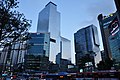 Samsung Headquarters
 -
 Lee Byung-chul
 -
 SPC-1000
 -
 Signs, signs and more signs
 -
 Korea President Park Business Leaders
 -
 본사 사옥
본사 사옥 -
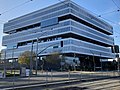 Samsung Headquarters - Silicon Valley
 -
 Dtssbld
 -
 Samsung Engineering India office
 -
 Samsung Japan Headquarter
 -
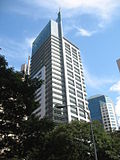 3 Church Street


