Interventional magnetic resonance imaging: Difference between revisions
CSV import |
CSV import |
||
| Line 37: | Line 37: | ||
{{Medicine-stub}} | {{Medicine-stub}} | ||
<gallery> | |||
File:IMRI TCH.jpg|Interventional magnetic resonance imaging | |||
File:IMRI suite.jpg|Interventional magnetic resonance imaging | |||
</gallery> | |||
Latest revision as of 01:12, 20 February 2025
Interventional Magnetic Resonance Imaging (iMRI) refers to the use of Magnetic Resonance Imaging (MRI) technology during medical procedures, often surgical or diagnostic interventions. This technique combines the high-contrast, multi-planar imaging capabilities of MRI with real-time guidance of surgical tools and devices, enabling precise and minimally invasive procedures.
Overview[edit]
Interventional MRI is designed to improve the accuracy and safety of various medical procedures. Unlike traditional imaging methods, such as X-ray and Computed Tomography (CT) scans, MRI does not use ionizing radiation, making it safer for repeated use. The detailed images produced by MRI allow clinicians to visualize soft tissues, blood vessels, and organs with high precision, facilitating targeted interventions.
Applications[edit]
The applications of iMRI are diverse and include, but are not limited to, the following areas:
- Neurosurgery: For brain tumor resections, biopsies, and the placement of deep brain stimulators.
- Orthopedic surgery: Assisting in the accurate placement of prostheses or the removal of tumors within bones or soft tissues.
- Cardiology: Guiding cardiac catheterizations and evaluating myocardial tissue before and after interventions.
- Oncology: Targeting and monitoring the treatment of tumors, including those in the liver, prostate, and breast.
Advantages[edit]
The primary advantages of iMRI include:
- Enhanced visualization of soft tissues, improving the accuracy of interventions.
- Reduced exposure to ionizing radiation.
- The ability to monitor the progress of a procedure in real-time, allowing for adjustments as needed.
Challenges[edit]
Despite its benefits, the use of iMRI presents several challenges:
- The need for specialized, MRI-compatible surgical instruments to avoid interference with the magnetic field.
- The requirement for operating rooms to be equipped with MRI facilities, significantly increasing the cost and complexity of procedures.
- The potential for longer procedure times due to the need to acquire and interpret MRI images during the intervention.
Future Directions[edit]
Research and development in the field of iMRI continue to focus on overcoming existing limitations and expanding its applications. Innovations such as faster imaging techniques, more compact and affordable MRI systems, and advanced MRI-compatible surgical tools are among the areas of interest.
See Also[edit]

-
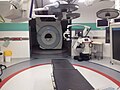 Interventional magnetic resonance imaging
 -
 Interventional magnetic resonance imaging


