Epidermodysplasia verruciformis: Difference between revisions
CSV import |
CSV import |
||
| Line 56: | Line 56: | ||
[[Category:Rare diseases]] | [[Category:Rare diseases]] | ||
[[Category:Skin conditions resulting from errors in metabolism]] | [[Category:Skin conditions resulting from errors in metabolism]] | ||
== Epidermodysplasia verruciformis == | |||
<gallery> | |||
File:World's 4th a Tree Man.jpg|Epidermodysplasia verruciformis | |||
</gallery> | |||
Latest revision as of 01:12, 20 February 2025
| Epidermodysplasia verruciformis | |
|---|---|
| Synonyms | Tree man syndrome |
| Pronounce | N/A |
| Specialty | N/A |
| Symptoms | Wart-like lesions, skin cancer |
| Complications | Squamous cell carcinoma |
| Onset | Childhood |
| Duration | Lifelong |
| Types | N/A |
| Causes | Genetic disorder, HPV infection |
| Risks | Immunodeficiency |
| Diagnosis | Clinical diagnosis, biopsy |
| Differential diagnosis | N/A |
| Prevention | N/A |
| Treatment | Surgery, cryotherapy, retinoids |
| Medication | N/A |
| Prognosis | N/A |
| Frequency | Rare |
| Deaths | N/A |
Epidermodysplasia verruciformis (EV), also known as tree man syndrome, is a rare genetic disorder characterized by an abnormal susceptibility to human papillomavirus (HPV) infections. This condition leads to the development of wart-like lesions on the skin and an increased risk of skin cancer, particularly squamous cell carcinoma.
Signs and Symptoms[edit]
Individuals with epidermodysplasia verruciformis typically present with wart-like lesions that may appear as flat-topped papules or plaques. These lesions are often found on the hands, feet, face, and other areas exposed to sunlight. Over time, these lesions can progress to malignant skin tumors.
Causes[edit]
Epidermodysplasia verruciformis is caused by mutations in the EVER1 or EVER2 genes, which are involved in the regulation of zinc homeostasis in the skin. These genetic mutations lead to an impaired immune response to certain types of HPV, particularly HPV types 5 and 8, which are commonly associated with this condition.
Diagnosis[edit]
The diagnosis of epidermodysplasia verruciformis is primarily clinical, based on the characteristic appearance of the skin lesions. A biopsy of the lesions can confirm the presence of HPV and rule out other conditions. Genetic testing may be performed to identify mutations in the EVER1 or EVER2 genes.
Treatment[edit]
There is no cure for epidermodysplasia verruciformis, but treatment focuses on managing symptoms and preventing complications. Options include:
- Surgical removal of lesions
- Cryotherapy
- Topical or systemic retinoids
- Interferon therapy
Regular monitoring for skin cancer is essential due to the increased risk of malignant transformation of the lesions.
Prognosis[edit]
The prognosis for individuals with epidermodysplasia verruciformis varies. While the condition is lifelong, early detection and treatment of skin cancers can improve outcomes. Patients require ongoing dermatological care to manage the condition effectively.
See Also[edit]
References[edit]
<references group="" responsive="1"></references>
External Links[edit]
Epidermodysplasia verruciformis[edit]
-
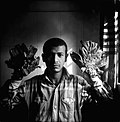 Epidermodysplasia verruciformis

