Alpha-thalassemia: Difference between revisions
CSV import |
CSV import |
||
| Line 85: | Line 85: | ||
[[Category:Hematology]] | [[Category:Hematology]] | ||
[[Category:Blood disorders]] | [[Category:Blood disorders]] | ||
== Alpha-thalassemia == | |||
<gallery> | |||
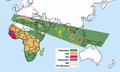
File:Thalassemia alpha.jpg|Alpha-thalassemia | |||
File:Illu blood cell lineage.jpg|Blood cell lineage | |||
File:একজন থ্যালাসেমিয়ার রোগী.jpg|Alpha-thalassemia | |||
File:DOMR-6-350-g004.gif|Alpha-thalassemia | |||
File:Red Blood Cell abnormalities.png|Red Blood Cell abnormalities | |||
</gallery> | |||
Revision as of 01:09, 20 February 2025
Alpha-thalassemia
Alpha-thalassemia is a blood disorder that reduces the production of hemoglobin. Hemoglobin is the protein in red blood cells that carries oxygen to cells throughout the body. Alpha-thalassemia is caused by mutations in the HBA1 and HBA2 genes, which are responsible for the production of alpha-globin, a component of hemoglobin.
Pathophysiology
In alpha-thalassemia, the production of alpha-globin chains is reduced or absent. This leads to an imbalance in the ratio of alpha to beta-globin chains, resulting in the formation of abnormal hemoglobin molecules. The severity of the disease depends on the number of affected alpha-globin genes.
Genetic Basis
The HBA1 and HBA2 genes are located on chromosome 16. Each person has four alpha-globin genes, two from each parent. The severity of alpha-thalassemia is determined by the number of gene deletions:
- Silent Carrier: One gene deletion, usually asymptomatic.
- Alpha-thalassemia Trait: Two gene deletions, mild anemia.
- Hemoglobin H Disease: Three gene deletions, moderate to severe anemia.
- Hydrops Fetalis: Four gene deletions, usually fatal before or shortly after birth.
Clinical Features
The clinical presentation of alpha-thalassemia varies depending on the number of affected genes.
Silent Carrier
Individuals with one deleted alpha-globin gene are typically asymptomatic and have normal hematological parameters.
Alpha-thalassemia Trait
Individuals with two deleted alpha-globin genes may have mild anemia and microcytosis. They are often asymptomatic and may be identified during routine blood tests.
Hemoglobin H Disease
This condition results from the deletion of three alpha-globin genes. It is characterized by:
- Moderate to severe anemia
- Splenomegaly
- Jaundice
- Bone deformities
Hydrops Fetalis
This is the most severe form of alpha-thalassemia, resulting from the deletion of all four alpha-globin genes. It leads to:
- Severe anemia
- Heart failure
- Edema
- Usually results in stillbirth or death shortly after birth
Diagnosis
Diagnosis of alpha-thalassemia involves:
- Complete blood count (CBC) showing microcytic anemia
- Hemoglobin electrophoresis
- Genetic testing to identify deletions in the HBA1 and HBA2 genes
Management
Management of alpha-thalassemia depends on the severity of the disease:
- Silent Carrier and Alpha-thalassemia Trait: Usually require no treatment.
- Hemoglobin H Disease: May require regular blood transfusions, folic acid supplementation, and splenectomy in severe cases.
- Hydrops Fetalis: Prenatal diagnosis and counseling are important. Intrauterine transfusions may be considered.
Prognosis
The prognosis of alpha-thalassemia varies:
- Silent carriers and individuals with alpha-thalassemia trait generally have a normal life expectancy.
- Hemoglobin H disease can lead to complications but is manageable with treatment.
- Hydrops fetalis is usually fatal without intervention.
Prevention
Genetic counseling is recommended for at-risk couples. Prenatal testing can identify affected fetuses, allowing for informed decision-making.
See Also
Alpha-thalassemia
-
 Alpha-thalassemia
 -
 Blood cell lineage
 -
 Alpha-thalassemia
 -
 Alpha-thalassemia
 -
 Red Blood Cell abnormalities


