Iodised salt: Difference between revisions
CSV import |
CSV import |
||
| Line 51: | Line 51: | ||
[[Category:Micronutrients]] | [[Category:Micronutrients]] | ||
[[Category:Salt]] | [[Category:Salt]] | ||
<gallery> | |||
File:Global iodized salt logo.jpg|Global iodized salt logo | |||
File:Iodized salt packet.jpg|Iodized salt packet | |||
File:Iodised salt.JPG|Iodised salt | |||
File:Share-of-households-consuming-iodized-salt.png|Share of households consuming iodized salt | |||
File:Stamp of Indonesia - 1996 - Colnect 253494 - UNICEF.jpeg|Stamp of Indonesia - 1996 - UNICEF | |||
File:Jodsalz mit Fluor und Folsaeure.jpg|Jodsalz mit Fluor und Folsäure | |||
</gallery> | |||
Revision as of 01:06, 20 February 2025
| [[File:|frameless|alt=]] | |
| Iodised salt in a container | |
| Alternative names | |
| Type | Salt |
| Course | |
| Place of origin | |
| Region or state | |
| Associated national cuisine | |
| Created by | |
| Invented | |
| Cooking time | minutes to minutes |
| Serving temperature | |
| Main ingredients | Salt, Potassium iodate or Potassium iodide |
| Ingredients generally used | |
| Variations | |
| Food energy | 0 kcal |
| Nutritional value | Protein: g, Fat: g, Carbohydrate: g |
| Glycemic index | |
| Similar dishes | |
| Other information | |
| Website | [ Official website] |
Iodised salt is table salt mixed with a minute amount of various iodine-containing salts. The ingestion of iodine prevents iodine deficiency. Worldwide, iodine deficiency affects about two billion people and is the leading preventable cause of intellectual disabilities.
History
The practice of adding iodine to salt began in the early 20th century as a public health measure to prevent goiter and other iodine deficiency disorders. The first country to implement a nationwide iodisation program was Switzerland in 1922, followed by the United States in 1924.
Health benefits
Iodised salt is an effective means of delivering iodine to populations that might not get enough of it through their diet. Iodine is essential for the production of thyroid hormones, which regulate metabolism, growth, and development.
Prevention of iodine deficiency
Iodine deficiency can lead to a range of health problems, including goiter, hypothyroidism, and intellectual disabilities in children. By ensuring adequate iodine intake, iodised salt helps prevent these conditions.
Recommended intake
The World Health Organization recommends a daily iodine intake of 150 micrograms for adults, 90-120 micrograms for children, and 250 micrograms for pregnant and lactating women. Iodised salt is a convenient way to meet these requirements.
Production
Iodised salt is produced by adding small amounts of potassium iodate or potassium iodide to table salt. The amount of iodine added is carefully controlled to ensure that it meets public health guidelines without exceeding safe levels.
Usage
Iodised salt is used in the same way as regular table salt. It can be added to food during cooking or at the table. It is important to store iodised salt in a dry place to prevent the iodine from evaporating.
Controversies
Some people believe that iodised salt has a different taste compared to non-iodised salt, although scientific studies have not confirmed this. Additionally, there are concerns about the stability of iodine in salt, especially in humid environments.
Alternatives
In areas where iodised salt is not available, iodine can be obtained from other sources such as seafood, dairy products, and iodine supplements.
See also
References
<references group="" responsive="1"></references>
External links
-
Global iodized salt logo
-
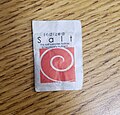 Iodized salt packet
 -
 Iodised salt
 -
 Share of households consuming iodized salt
 -
 Stamp of Indonesia - 1996 - UNICEF
 -
 Jodsalz mit Fluor und Folsäure


