FK962: Difference between revisions
CSV import |
CSV import |
||
| Line 31: | Line 31: | ||
{{pharmacology-stub}} | {{pharmacology-stub}} | ||
{{No image}} | {{No image}} | ||
<gallery> | |||
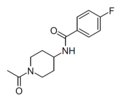
File:FK962 structure.png|FK962 | |||
</gallery> | |||
Revision as of 01:05, 20 February 2025
FK962 is a neurotrophic compound that has been shown to enhance acetylcholine release in the brain. It is a synthetic compound that has been studied for its potential use in the treatment of neurodegenerative diseases such as Alzheimer's disease.
Mechanism of Action
FK962 works by stimulating the release of acetylcholine, a neurotransmitter that plays a key role in memory and learning. It does this by activating sigma-1 receptors, which are protein molecules found in the brain that are involved in the regulation of various cellular processes. Activation of these receptors has been shown to increase the release of acetylcholine.
Potential Therapeutic Uses
Due to its ability to enhance acetylcholine release, FK962 has been studied for its potential use in the treatment of neurodegenerative diseases that are characterized by a decline in cognitive function, such as Alzheimer's disease. In preclinical studies, FK962 has been shown to improve memory and cognitive function in animal models of Alzheimer's disease.
Side Effects and Safety
The safety and side effects of FK962 are not well-studied. As with any drug, potential side effects and safety concerns would need to be thoroughly evaluated in clinical trials before FK962 could be approved for use in humans.
Research and Development
Research into the potential therapeutic uses of FK962 is ongoing. While preclinical studies have shown promising results, further research is needed to determine the efficacy and safety of FK962 in humans.
See Also

-
 FK962
FK962

