Shimeji: Difference between revisions
CSV import |
CSV import |
||
| Line 30: | Line 30: | ||
[[Category:Mushrooms]] | [[Category:Mushrooms]] | ||
[[Category:Asian Cuisine]] | [[Category:Asian Cuisine]] | ||
== Shimeji == | |||
<gallery> | |||
File:Asian mushrooms.jpg|Asian mushrooms | |||
File:Lyophyllum shimeji.jpg|Lyophyllum shimeji | |||
File:Japanese Hokto Bunapie 2.JPG|Japanese Hokto Bunapie | |||
</gallery> | |||
Latest revision as of 00:50, 20 February 2025
Introduction[edit]
Shimeji is a type of edible mushroom native to East Asia. It is a popular ingredient in various Asian cuisines due to its rich, savory taste and health benefits. Shimeji mushrooms are also known for their unique texture and are often used in soups, stir-fries, and other dishes.
History[edit]
The history of Shimeji dates back to ancient times in East Asia. They have been used in traditional medicine for centuries due to their potential health benefits. The cultivation of Shimeji mushrooms began in Japan and later spread to other parts of Asia.
Cultivation[edit]
Shimeji mushrooms are typically grown on wood or in a substrate made of organic materials. They require specific conditions to grow, including a certain temperature and humidity level. The cultivation process can take several weeks to months, depending on the specific type of Shimeji mushroom.
Types of Shimeji[edit]
There are several types of Shimeji mushrooms, including the Beech Mushroom (Buna-Shimeji), the White Beech Mushroom (Bunapi-Shimeji), and the Brown Beech Mushroom (Bunashimeji). Each type has a slightly different taste and texture, but all are known for their rich, savory flavor.
Culinary Uses[edit]
Shimeji mushrooms are used in a variety of dishes in Asian cuisine. They are often used in soups, stir-fries, and other dishes due to their unique texture and flavor. Shimeji mushrooms can also be sautéed, grilled, or roasted and served as a side dish.
Health Benefits[edit]
Shimeji mushrooms are known for their potential health benefits. They are low in calories and high in nutrients, including vitamins and minerals. Some studies suggest that Shimeji mushrooms may have anti-cancer properties and can boost the immune system.
Conclusion[edit]
Shimeji mushrooms are a versatile and nutritious ingredient in many Asian dishes. Their unique flavor and texture, along with their potential health benefits, make them a popular choice for many chefs and home cooks.
Shimeji[edit]
-
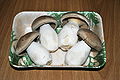
 Asian mushrooms
 -
 Lyophyllum shimeji
 -
 Japanese Hokto Bunapie


