Restaurant: Difference between revisions
CSV import |
CSV import |
||
| Line 44: | Line 44: | ||
[[Category:Food industry]] | [[Category:Food industry]] | ||
[[Category:Hospitality industry]] | [[Category:Hospitality industry]] | ||
<gallery> | |||
File:Barbieri - ViaSophia25668.jpg|Restaurant | |||
File:Interior of Le Bernardin.jpg|Restaurant | |||
File:Ancient Bar, Pompeii.jpg|Restaurant | |||
File:GrandeTaberna.JPG|Restaurant | |||
File:Petrus (London) Kitchen.jpg|Restaurant | |||
File:Pizza Truck NYC 50 jeh.JPG|Restaurant | |||
File:Kellosaarenranta by night.JPG|Restaurant | |||
File:Chef's table at Marcus.jpg|Restaurant | |||
File:Paris Palais Royal Restaurant Grand Véfour 4.jpg|Restaurant | |||
File:RitzParisGarden.jpg|Restaurant | |||
File:Tom's Restaurant, NYC.jpg|Restaurant | |||
File:Noma entrance.jpg|Restaurant | |||
</gallery> | |||
Latest revision as of 00:44, 20 February 2025
Restaurant


A restaurant is a business that prepares and serves food and drinks to customers. Meals are generally served and eaten on the premises, but many restaurants also offer take-out and food delivery services. Restaurants vary greatly in appearance and offerings, including a wide variety of cuisines and service models ranging from inexpensive fast food restaurants and cafeterias, to mid-priced family restaurants, to high-priced luxury establishments.
History[edit]
The concept of selling food for profit dates back to ancient civilizations. In Ancient Rome, "thermopolia" were small restaurant-bars that offered food and drinks. The

shows a typical example of such establishments. In the Middle Ages, inns and taverns served travelers and locals alike, providing meals and drinks.
The modern restaurant as we know it today originated in 18th century France. The word "restaurant" is derived from the French word "restaurer," meaning "to restore." The first restaurant in the modern sense is often credited to Boulanger, a soup vendor in Paris, who opened his business in 1765.
Types of Restaurants[edit]
Restaurants can be categorized in several ways:
- Fast food restaurant: These establishments emphasize speed of service and low cost. They often have a limited menu and offer take-out options.
- Casual dining restaurant: These restaurants offer a relaxed atmosphere with moderately priced food. They often have a larger menu and provide table service.
- Fine dining restaurant: Known for their formal atmosphere, fine dining restaurants offer high-quality food and service. They often have a dress code and require reservations.
- Café: A small restaurant serving coffee, light meals, and snacks. Cafés often have a casual atmosphere and may offer outdoor seating.
Restaurant Operations[edit]
Running a restaurant involves several key operations:
- Menu planning: Deciding on the dishes to be offered, considering factors like cuisine, cost, and customer preferences.
- Food preparation: The process of cooking and assembling dishes, which requires skilled chefs and kitchen staff.
- Service: The interaction between staff and customers, including taking orders, serving food, and handling payments.
- Management: Overseeing the restaurant's operations, including staffing, inventory, and financial management.
Cultural Significance[edit]
Restaurants play a significant role in social and cultural life. They are places for social gatherings, celebrations, and business meetings. Restaurants also reflect cultural diversity, offering cuisines from around the world and contributing to the cultural exchange.
Also see[edit]

-
 Restaurant
 -
 Restaurant
 -
 Restaurant
 -
 Restaurant
 -
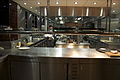 Restaurant
 -
 Restaurant
 -
 Restaurant
 -
 Restaurant
 -
 Restaurant
 -
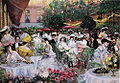 Restaurant
 -
 Restaurant
 -
 Restaurant


_Kitchen.jpg)


