Antibiotic use in livestock: Difference between revisions
CSV import |
CSV import |
||
| Line 39: | Line 39: | ||
{{medicine-stub}} | {{medicine-stub}} | ||
<gallery> | |||
File:Ar-infographic-950px.jpg|Antibiotic use in livestock | |||
File:Hartsock Genetic Engineering Bacteria Cell Division.png|Antibiotic use in livestock | |||
File:Antibiotic use in livestock, OWID.svg|Antibiotic use in livestock | |||
File:Does livestock antibiotic use exceed suggested target., OWID.svg|Antibiotic use in livestock | |||
File:Antibiotic use in livestock in Europe, OWID.svg|Antibiotic use in livestock | |||
File:Global antibiotic use in livestock under reduction scenarios, OWID.svg|Antibiotic use in livestock | |||
</gallery> | |||
Latest revision as of 00:40, 20 February 2025
Antibiotic use in livestock refers to the practice of administering antibiotics to livestock to promote growth and prevent diseases. This practice has been prevalent in the agriculture and animal husbandry industries for several decades. However, it has been a subject of controversy due to its potential impact on antibiotic resistance in humans and the environment.
History[edit]
The use of antibiotics in livestock began in the mid-20th century, following the discovery of antibiotics. Initially, antibiotics were used to treat sick animals. However, farmers soon discovered that regular, low doses of antibiotics could promote growth in livestock, leading to the widespread use of antibiotics as growth promoters.
Use and Administration[edit]
Antibiotics are administered to livestock in various ways. They can be added to the animals' feed or water, or they can be injected directly into the animals. The type and amount of antibiotics used depend on the species of livestock, their age, and their health status.
Impact on Antibiotic Resistance[edit]
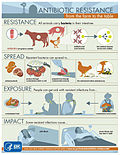
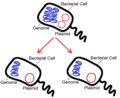
The use of antibiotics in livestock has been linked to the emergence of antibiotic-resistant bacteria. These bacteria can spread to humans through the consumption of contaminated meat or dairy products, or through contact with infected animals or their environment. This can lead to infections that are difficult to treat, posing a significant threat to public health.
Regulation[edit]
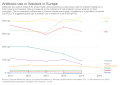
In response to the threat of antibiotic resistance, many countries have implemented regulations to control the use of antibiotics in livestock. These regulations vary widely, with some countries banning the use of antibiotics as growth promoters, while others have implemented stricter controls on the types and amounts of antibiotics that can be used.
Alternatives to Antibiotics[edit]
Due to the risks associated with antibiotic use in livestock, there has been increasing interest in developing alternatives to antibiotics. These include probiotics, prebiotics, and vaccines, which can promote animal health and growth without contributing to antibiotic resistance.
See Also[edit]
- Antibiotic resistance
- Livestock
- Agriculture
- Animal husbandry
- Growth promoters
- Probiotics
- Prebiotics
- Vaccines

-
 Antibiotic use in livestock
 -
 Antibiotic use in livestock
 -
 Antibiotic use in livestock
 -
 Antibiotic use in livestock
 -
 Antibiotic use in livestock
 -
 Antibiotic use in livestock


