Tübingen: Difference between revisions
CSV import Tags: mobile edit mobile web edit |
CSV import |
||
| Line 22: | Line 22: | ||
{{Germany-stub}} | {{Germany-stub}} | ||
{{medicine-stub}} | {{medicine-stub}} | ||
<gallery> | |||
File:Tübingen_-_Neckarfront_04.jpg|Tübingen | |||
File:Tübingen_Markt_BW_2015-04-27_15-43-00.jpg|Tübingen | |||
File:TuebingenNeckar.jpg|Tübingen | |||
File:Baden-Württemberg_Tübingen_03.jpg|Tübingen | |||
File:TuebingenNeckarfront3.jpg|Tübingen | |||
File:TuebingenStiftskirche.jpg|Tübingen | |||
File:Tübingen_street_art.jpg|Tübingen | |||
File:Neckar_watershed_closer.gif|Tübingen | |||
File:Neckar_Stocherkahn.JPG|Tübingen | |||
File:ArminiaStocherkahn.jpg|Tübingen | |||
File:Neue_Aula_in_Tübingen_zur_blauen_Stunde_2019.jpg|Tübingen | |||
File:Germany_Tübingen_Student.jpg|Tübingen | |||
</gallery> | |||
Latest revision as of 12:24, 18 February 2025
Tübingen is a traditional university town in central Baden-Württemberg, Germany. It is situated 30 km south of the state capital, Stuttgart, on a ridge between the Neckar and Ammer rivers.
History[edit]
Tübingen has a rich history dating back to the 6th or 7th century when the region was populated by the Alamanni. The town was founded by the counts of Tübingen in the 1078 AD. The University of Tübingen was established in 1477, making it one of the oldest universities in Germany.
Healthcare in Tübingen[edit]
Tübingen is home to several hospitals and medical research centers. The University Hospital Tübingen is one of the largest and most competitive medical facilities in Germany. It is renowned for its advancements in neurology, oncology, immunology, and genetics. The Hertie Institute for Clinical Brain Research, which focuses on neurological diseases, is also located in Tübingen.
Medical Research[edit]
Tübingen is a hub for medical research. The Max Planck Institute for Biological Cybernetics and the Max Planck Institute for Developmental Biology are both located in the city. These institutes conduct cutting-edge research in various fields of medicine and biology.
Education[edit]
The University of Tübingen is one of the oldest and most prestigious universities in Germany. It offers a wide range of courses, with a particular focus on humanities, natural sciences, and theology. The university also has a strong emphasis on research, particularly in the fields of medicine, pharmaceuticals, and life sciences.
Culture[edit]
Tübingen is known for its vibrant cultural scene. The city hosts several festivals throughout the year, including the Tübingen Film Festival and the Tübingen Literature Festival. The city is also home to numerous museums, such as the Museum of Ancient Cultures and the Hohentübingen Castle Museum.


-
 Tübingen
 -
 Tübingen
 -
 Tübingen
 -
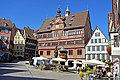 Tübingen
 -
 Tübingen
 -
 Tübingen
 -
 Tübingen
 -
 Tübingen
 -
 Tübingen
 -
 Tübingen
 -
 Tübingen
 -
 Tübingen


