Candida albicans: Difference between revisions
CSV import |
CSV import |
||
| Line 30: | Line 30: | ||
File:C_albicans_germ_tubes.jpg|Candida albicans | File:C_albicans_germ_tubes.jpg|Candida albicans | ||
File:Candida_Gram_stain.jpg|Candida albicans | File:Candida_Gram_stain.jpg|Candida albicans | ||
File:CHROMAgar_with_N_glabratus,_P_kudriavzevii,_Candida_albicans_and_Candida_tropicalis,_annotated.jpg|Candida albicans | |||
File:Mycology_algorithm.png|Candida albicans | |||
</gallery> | |||
<gallery> | |||
File:SEM_of_C_albicans.tif|Candida albicans | |||
File:Candida_Gram_stain.jpg|Candida albicans | |||
File:Candida_albicans_PHIL_3192_lores.jpg|Candida albicans | |||
File:Candida_albicans_mixed_colony.jpg|Candida albicans | |||
File:Whiteopaquecandida.jpg|Candida albicans | |||
File:Whiteopaqueregulation.jpg|Candida albicans | |||
File:C_albicans_germ_tubes.jpg|Candida albicans | |||
File:CHROMAgar_with_N_glabratus,_P_kudriavzevii,_Candida_albicans_and_Candida_tropicalis,_annotated.jpg|Candida albicans | File:CHROMAgar_with_N_glabratus,_P_kudriavzevii,_Candida_albicans_and_Candida_tropicalis,_annotated.jpg|Candida albicans | ||
File:Mycology_algorithm.png|Candida albicans | File:Mycology_algorithm.png|Candida albicans | ||
</gallery> | </gallery> | ||
Revision as of 12:24, 18 February 2025
Candida albicans is a species of fungus that is part of the normal microbiota in the human body. It is commonly found in the gastrointestinal tract, oral cavity, and vagina. However, under certain conditions, it can cause infection, known as candidiasis.
Characteristics
Candida albicans is a dimorphic fungus, meaning it can exist in two different forms: as yeast cells or as filamentous cells. The yeast form is oval-shaped and reproduces by budding, while the filamentous form consists of long, thread-like cells called hyphae.
Pathogenicity
While Candida albicans is normally harmless, it can become pathogenic under certain conditions. This usually occurs when the immune system is weakened, such as in individuals with HIV/AIDS or those undergoing chemotherapy. Other risk factors include the use of antibiotics, which can disrupt the normal balance of microbiota, and diabetes, which can alter the body's pH and create a more favorable environment for the fungus.
Diagnosis and Treatment
Diagnosis of Candida albicans infections is typically done through laboratory testing, including microscopy and culture. Treatment usually involves antifungal medication, such as fluconazole or amphotericin B.
Research
Research on Candida albicans is ongoing, with scientists studying its genetics, pathogenicity, and resistance to antifungal drugs. This research is crucial for the development of new treatments and prevention strategies.

-
 Candida albicans
 -
 Candida albicans
 -
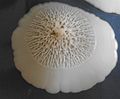 Candida albicans
 -
 Candida albicans
 -
 Candida albicans
 -
Candida albicans
-
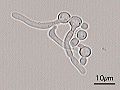 Candida albicans
 -
Candida albicans
-
 Candida albicans
 -
 Candida albicans


-
 Candida albicans
 -
Candida albicans
-
Candida albicans
-
Candida albicans
-
Candida albicans
-
Candida albicans
-
Candida albicans
-
Candida albicans
-
Candida albicans
