Anthropocene: Difference between revisions
CSV import |
CSV import |
||
| Line 32: | Line 32: | ||
{{Environment-stub}} | {{Environment-stub}} | ||
{{medicine-stub}} | {{medicine-stub}} | ||
<gallery> | |||
File:The_Anthropocene_triple_threat—climate_change,_biodiversity_loss,_and_global_food_insecurity_-_Fsufs-05-564900-g001.jpg|Anthropocene | |||
File:Trinity_Test_Fireball_16ms.jpg|Anthropocene | |||
File:CC-BY_icon.svg|Anthropocene | |||
File:062821Yreka_Fire_CalFire_-2wiki.jpg|Anthropocene | |||
File:Bleachedcoral.jpg|Anthropocene | |||
File:Village_Telly_in_Mali.jpg|Anthropocene | |||
File:US_Navy_071120-M-8966H-005_An_aerial_view_over_southern_Bangladesh_reveals_extensive_flooding_as_a_result_of_Cyclone_Sidr.jpg|Anthropocene | |||
File:Technofossils.jpg|Anthropocene | |||
File:Decline-of-the-worlds-wild-mammals.png|Anthropocene | |||
File:Earth's_City_Lights_by_DMSP,_1994-1995_(large).jpg|Anthropocene | |||
</gallery> | |||
Revision as of 12:17, 18 February 2025
Anthropocene is a proposed epoch dating from the commencement of significant human impact on the Earth's geology and ecosystems, including, but not limited to, anthropogenic climate change.
Overview
The Anthropocene is a proposed epoch that begins when human activities started to have a significant global impact on Earth's geology and ecosystems. The term – which appears to have been used by Russian scientists as early as the 1960s to refer to the Quaternary, the most recent geological period – was coined with a different sense in the 1980s by ecologist Eugene F. Stoermer and has been widely popularized by atmospheric chemist Paul J. Crutzen, who regards the influence of human behavior on the Earth's atmosphere in recent centuries as so significant as to constitute a new geological epoch.
History
The concept of the Anthropocene has a long history, with roots in geology and ecology. The term itself was first used in the 1980s by ecologist Eugene F. Stoermer, but it was popularized in the year 2000 by atmospheric chemist Paul J. Crutzen. Crutzen has argued that the influence of human behavior on the Earth's atmosphere over recent centuries is so significant that it constitutes a new geological epoch.
Characteristics
The Anthropocene is characterized by the significant global impact of human activities on the Earth's geology and ecosystems. This includes changes to the atmosphere, biosphere, geosphere, and hydrosphere, often related to anthropogenic climate change. Some of the most significant changes include increases in greenhouse gases such as carbon dioxide and methane, deforestation, and the proliferation of plastic pollution.
Controversies
The proposal to formalize the Anthropocene remains controversial within the scientific community, with ongoing debates over when it began and whether it should be recognized as an official geological epoch. Some scientists argue that the Anthropocene began with the Industrial Revolution, while others suggest it started with the advent of agriculture. There is also debate over the name itself, with some suggesting that the term "Anthropocene" is more of a cultural than a scientific classification.
See also
References
<references />

This climate change related article is a stub. You can help WikiMD by expanding it.

This article is a environment-related stub. You can help WikiMD by expanding it!

-
 Anthropocene
 -
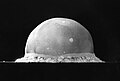 Anthropocene
 -
 Anthropocene
 -
 Anthropocene
 -
 Anthropocene
 -
 Anthropocene
 -
 Anthropocene
 -
 Anthropocene
 -
 Anthropocene
 -
 Anthropocene


.jpg)
