Carob: Difference between revisions
CSV import |
CSV import |
||
| Line 32: | Line 32: | ||
{{Nutrition-stub}} | {{Nutrition-stub}} | ||
{{Agriculture-stub}} | {{Agriculture-stub}} | ||
<gallery> | |||
File:Ceratonia_siliqua_Keciboynuzu_1370984_Nevit.jpg|Carob | |||
File:Carob_tree_leaf.JPG|Carob | |||
File:Illustration_Ceratonia_siliqua0.jpg|Carob | |||
File:Arcosu07.jpg|Carob | |||
File:Garroves.JPG|Carob | |||
File:Carob_chocolate_chip_cookies_with_coconut_and_cranberries.jpg|Carob | |||
File:Carob_Confections.png|Carob | |||
File:A_bottle_of_Maltese_carob_liqueur_with_the_north_coast_of_Gozo_Island_in_the_background_(Malta,_April_2009).jpg|Carob | |||
File:Carob_tree.jpg|Carob | |||
File:Blooming_carob_tree.jpg|Carob | |||
File:Ceratonia_siliqua_female_flowers_a-RJP.jpg|Carob | |||
File:Ceratonia_siliqua_green_pods.jpg|Carob | |||
</gallery> | |||
Revision as of 12:09, 18 February 2025
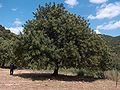
Carob (Ceratonia siliqua) is a flowering evergreen tree or shrub in the pea family, Fabaceae. It is native to the Mediterranean region, including parts of Europe, Africa, and the Middle East. The carob tree is cultivated for its edible pods, which are often used as a chocolate substitute in various culinary applications due to their sweet taste. Carob is also known for its nutritional benefits and has been used in traditional medicine.
Description
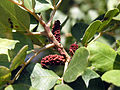
The carob tree can grow up to 15 meters (49 ft) in height. It is well-adapted to arid climates and is known for its drought resistance. The leaves are compound, glossy, and evergreen, providing shade and greenery throughout the year. The flowers are small and inconspicuous, with male, female, and hermaphrodite flowers found on separate trees. The fruit of the carob tree is a dark brown pod that contains sweet, edible pulp and hard seeds. The pods are harvested in the fall and can be processed into various products.
Cultivation
Carob trees are grown from seed or by grafting. They prefer well-drained soil and a sunny location. Trees begin to bear fruit after 6 to 8 years and can be productive for over 100 years. Carob cultivation does not require high levels of agricultural inputs, making it a sustainable crop for many Mediterranean climates.
Uses
Carob pods are consumed fresh or dried and are often ground into carob powder. This powder is used as a cocoa substitute in baking and for making carob chips, a popular alternative to chocolate chips. Carob is naturally sweet and does not contain the stimulants caffeine and theobromine found in cocoa, making it a preferred choice for those avoiding these substances.
In addition to its culinary uses, carob has applications in health and nutrition. It is rich in fiber, antioxidants, and low in fat and sugar. Carob is used in traditional remedies for digestive issues and is researched for its potential health benefits, including its role in lowering cholesterol levels and improving blood sugar control.
Nutritional Value
Carob is a good source of vitamins and minerals, including calcium, magnesium, potassium, and vitamin B2. It is also high in dietary fiber and contains essential antioxidants that can help protect the body against free radical damage.
Environmental Impact
The carob tree is considered an environmentally friendly crop. Its deep root system helps prevent soil erosion, and the tree's ability to thrive in arid conditions makes it a valuable species for reforestation and desertification control projects.
Traditional Medicine
In traditional medicine, carob has been used to treat various ailments such as diarrhea, vomiting, and cough. The seeds, known as locust beans, are used in the pharmaceutical industry as a source of locust bean gum, a thickening agent.
Conclusion
Carob is a versatile and nutritious plant that offers a range of benefits for health, cuisine, and the environment. Its cultivation supports sustainable agriculture practices, and its products provide a delicious and healthy alternative to chocolate.


This article is a agriculture stub. You can help WikiMD by expanding it!
-
 Carob
Carob -
 Carob
Carob -
 Carob
Carob -
 Carob
Carob -
 Carob
Carob -
 Carob
Carob -
 Carob
Carob -
 Carob
Carob -
 Carob
Carob -
 Carob
Carob -
 Carob
Carob -
 Carob
Carob


.jpg)


