Nasi kuning: Difference between revisions
CSV import |
CSV import Tags: mobile edit mobile web edit |
||
| Line 22: | Line 22: | ||
{{Indonesia-food-stub}} | {{Indonesia-food-stub}} | ||
{{food-stub}} | {{food-stub}} | ||
<gallery> | |||
File:Nasi_Kuning_Ibu_Sulastri.jpg|Nasi kuning | |||
File:Ritual_Birat_Sengkolo_Kejawen.jpg|Nasi kuning | |||
File:Tumpeng_Kompas_1.jpg|Nasi kuning | |||
File:BUMBU_NASI_KUNING_(tanpa_tulisan).png|Nasi kuning | |||
File:Preparing_nasi_kuning.JPG|Nasi kuning | |||
File:Nasi_Kuning_Breakfast.jpg|Nasi kuning | |||
File:Nasi_Kuning_Banjar_001.jpg|Nasi kuning | |||
File:Nasi_Kuning_Dendeng_Khas_Banjarmasin.jpg|Nasi kuning | |||
File:Nasi_Kuning_Daun_Woka.jpg|Nasi kuning | |||
File:Nasi_kuning_kotak_box.jpg|Nasi kuning | |||
File:Nasi_Kuning_Tawau.jpg|Nasi kuning | |||
</gallery> | |||
Revision as of 12:07, 18 February 2025
Nasi Kuning or Yellow Rice is a traditional Indonesian dish that is often served at special occasions. The dish gets its distinctive color from turmeric, which is also known for its health benefits.
Overview
Nasi Kuning is a flavorful dish that is often served as part of a larger meal. It is typically made with rice, turmeric, coconut milk, and a variety of other ingredients that can include lemongrass, pandan leaves, and bay leaves. The dish is often served with a variety of side dishes, such as fried chicken, tempeh, tofu, and sambal, a spicy Indonesian condiment.
Cultural Significance
In Indonesian culture, Nasi Kuning has significant meaning and is often served at special occasions. The yellow color of the rice is symbolic of gold, which represents wealth and prosperity. It is often served at celebrations such as birthdays and weddings, as well as at religious ceremonies.
Preparation
The preparation of Nasi Kuning involves rinsing the rice and then cooking it with turmeric and coconut milk. This gives the rice its yellow color and creamy texture. Additional ingredients such as lemongrass, pandan leaves, and bay leaves are often added to enhance the flavor. The rice is typically cooked in a rice cooker, but it can also be cooked in a pot on the stove.
Serving
Nasi Kuning is typically served as part of a larger meal. It can be served with a variety of side dishes, such as fried chicken, tempeh, tofu, and sambal. In some regions of Indonesia, it is also common to serve Nasi Kuning with a hard-boiled egg, which is another symbol of wealth and prosperity.
See Also

-
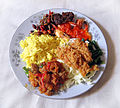 Nasi kuning
 -
 Nasi kuning
 -
Nasi kuning
-
Nasi kuning
-
Nasi kuning
-
Nasi kuning
-
Nasi kuning
-
Nasi kuning
-
Nasi kuning
-
Nasi kuning
-
Nasi kuning


.png)


