Tetrapod: Difference between revisions
CSV import |
CSV import |
||
| Line 36: | Line 36: | ||
{{stub}} | {{stub}} | ||
<gallery> | |||
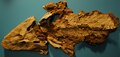
File:Tetrapoda.jpg|Tetrapod | |||
File:Tetrapoda_PhyloCode_(en).svg|Tetrapod | |||
File:Biodiversity_of_Tetrapods_by_Sahney_Benton_and_Ferry.gif|Tetrapod | |||
File:Lithobates_pipiens.jpg|Tetrapod | |||
File:Florida_Box_Turtle_Digon3.jpg|Tetrapod | |||
File:Cuvier-33-Moineau_domestique.jpg|Tetrapod | |||
File:Squirrel_(PSF).png|Tetrapod | |||
File:Linnaeus_-_Regnum_Animale_(1735).png|Tetrapod | |||
File:Devonianfishes_ntm_1905_smit_1929.gif|Tetrapod | |||
File:FMC08-24_Tiktaalik_rosae.tif|Tetrapod | |||
File:Eusthenopteron_BW.jpg|Tetrapod | |||
File:Panderichthys_BW.jpg|Tetrapod | |||
</gallery> | |||
Revision as of 12:05, 18 February 2025
Tetrapod
Tetrapods are a superclass of animals that includes four-limbed vertebrates, also known as quadrupeds. This group includes existing groups such as amphibians, reptiles, birds, and mammals. It also includes extinct groups like various extinct fish groups and primitive wingless insects.
Evolution
The first tetrapods evolved in the Devonian period, around 367.5 million years ago, during the evolutionary radiation known as the Romer's gap. The change from a body plan for breathing and navigating in water to a body plan enabling the animal to move on land is one of the most profound evolutionary changes known.
Characteristics
Tetrapods have numerous anatomical characteristics that distinguish them from their aquatic ancestors. These include a neck which allows the head to move independently of the body, lungs, and an inner ear that can process airborne sounds.
Classification
Tetrapods are classified into various subclasses and orders. The existing groups of tetrapods include the Amphibia, the Reptilia, the Aves, and the Mammalia.
See also
References
<references />


.svg)


.png)
.png)