Lech Wałęsa: Difference between revisions
CSV import |
CSV import |
||
| Line 41: | Line 41: | ||
[[Category:Polish Nobel laureates]] | [[Category:Polish Nobel laureates]] | ||
[[Category:Solidarity (Polish trade union) activists]] | [[Category:Solidarity (Polish trade union) activists]] | ||
<gallery> | |||
File:Wojtek_i_Wałęsa.JPG|Lech Wałęsa | |||
File:Strajk_sierpniowy_w_Stoczni_Gdańskiej_im._Lenina_22.jpg|Lech Wałęsa | |||
File:Stakingsleider_Lech_Walesa_deelt_handtekeningen_uit,_Bestanddeelnr_253-8300.jpg|Lech Wałęsa | |||
File:President_Bush_meets_privately_with_Solidarity_Leader_Lech_Walesa_of_Poland_in_the_residence_-_NARA_-_186403.jpg|Lech Wałęsa | |||
File:Lech_Walesa_speech_at_Legislative_Yuan_(1996)_05.jpg|Lech Wałęsa | |||
File:Lech_Walesa_ITB_2011.jpg|Lech Wałęsa | |||
File:Lech_Wałęsa,_Łódź_VIII_European_Economic_Forum,_October_2015_02.jpg|Lech Wałęsa | |||
File:Lech_Wałęsa-Bolek.jpg|Lech Wałęsa | |||
File:Defense.gov_photo_essay_110524-D-XH843-007.jpg|Lech Wałęsa | |||
File:PL_Wałęsa_movie_premiere.jpg|Lech Wałęsa | |||
</gallery> | |||
Revision as of 12:03, 18 February 2025
Lech Wałęsa (born 29 September 1943) is a Polish statesman, dissident, and Nobel Peace Prize laureate, who served as the President of Poland from 1990 to 1995. He is best known for his role in leading the Solidarity movement, which played a central role in the end of communist rule in Poland.
Early Life and Career
Lech Wałęsa was born in the village of Popowo, Poland. He grew up in a working-class family and trained as an electrician. In 1967, he began working at the Lenin Shipyard (now Gdańsk Shipyard) in Gdańsk, where he became involved in trade union activities.
Solidarity Movement
In the 1970s, Wałęsa became increasingly active in the workers' rights movement. In 1980, he was a key figure in the Gdańsk Shipyard strike, which led to the formation of Solidarity, the first independent trade union in the Soviet bloc. Wałęsa's leadership and negotiation skills were instrumental in the signing of the Gdańsk Agreement, which granted workers the right to strike and form independent unions.
Nobel Peace Prize
In 1983, Wałęsa was awarded the Nobel Peace Prize for his efforts in promoting peaceful change through negotiation and dialogue. Due to the political situation in Poland, he was unable to leave the country to accept the prize in person, and his wife, Danuta, accepted it on his behalf.
Presidency
Following the fall of communism in Poland, Wałęsa was elected as the President of Poland in 1990. His presidency was marked by efforts to transition Poland from a centrally planned economy to a market economy, as well as navigating the complexities of post-communist political life.
Later Life and Legacy
After leaving office in 1995, Wałęsa remained active in Polish and international politics, advocating for democracy and human rights. He has been a vocal critic of authoritarianism and continues to be a symbol of the struggle for freedom and democracy.
Also see
Template:Nobel Peace Prize laureates 1981–2000
-
 Lech Wałęsa
 -
 Lech Wałęsa
 -
 Lech Wałęsa
 -
 Lech Wałęsa
 -
 Lech Wałęsa
 -
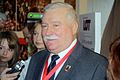 Lech Wałęsa
 -
 Lech Wałęsa
 -
 Lech Wałęsa
 -
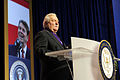 Lech Wałęsa
 -
 Lech Wałęsa


_05.jpg)


