Park: Difference between revisions
CSV import Tags: mobile edit mobile web edit |
CSV import |
||
| Line 39: | Line 39: | ||
[[Category:Outdoor recreation]] | [[Category:Outdoor recreation]] | ||
{{Parks-stub}} | {{Parks-stub}} | ||
<gallery> | |||
File:Halleyparknovember_b.jpg|Park | |||
File:Antalya,_Turkey_March_2022_-_Düden_Park_Sign.jpg|Düden Park Sign | |||
File:Medieval_Hunting_Park.JPG|Medieval Hunting Park | |||
File:Hatanpää_Arboretum_2020.jpg|Hatanpää Arboretum | |||
File:Нидерланды_Кекенхоф_Королевский_парк_тюльпанов.jpg|Keukenhof Royal Tulip Park | |||
File:Veale_Gardens.JPG|Veale Gardens | |||
File:Example_of_night_photography_at_The_Garden_of_Five_Senses,_New_Delhi.JPG|Garden of Five Senses, New Delhi | |||
File:Portlandskate.jpg|Park | |||
File:Zackenberg.4.jpg|Park | |||
File:Yoyogi_Park_from_Hyatt.jpg|Yoyogi Park | |||
File:NYC_-_Manhattan_-_Central-Park.jpg|Central Park | |||
File:İlham_Əliyev_Bakıda_Hərbi_Qənimətlər_Parkının_açılışında_(46).jpg|Park | |||
</gallery> | |||
Latest revision as of 12:02, 18 February 2025
Park
A park is a designated area, often in a natural or semi-natural state, set aside for human enjoyment or for the protection of wildlife or natural habitats. It may consist of grassy areas, rocks, soil, and trees, but may also contain buildings and other artifacts such as monuments, fountains or playground structures. In North America, many parks have fields for playing sports such as soccer, baseball and football, and paved areas for games such as basketball. Many parks have trails for walking, biking and other activities. Some parks are built adjacent to bodies of water or watercourses and may comprise a beach or boat dock area.
History[edit]
Parks have a long history, dating back to ancient times. The first parks were English deer parks, land set aside for hunting by royalty and the aristocracy in medieval times. They had walls or thick hedges around them to keep game in and people out.
Types of Parks[edit]
There are several types of parks, each serving a different purpose. These include:
- National Park: A park that is operated by the national government and is often larger than other types of parks. These parks often protect beautiful landscapes and ecosystems, such as the Grand Canyon National Park in the United States.
- Urban Park: Also known as a municipal park or public park, these are green spaces set aside for recreation in an urban environment. Examples include Central Park in New York City and Hyde Park in London.
- Theme Park: A type of amusement park that is structured around a central theme, such as an era of history, a group of associated ideas, or a geographical area. Examples include Disneyland and Universal Studios.
- Nature Reserve: A type of park that is primarily used for the conservation of wildlife and natural habitats. These parks often have strict rules to protect the flora and fauna within them.
Benefits of Parks[edit]
Parks provide numerous benefits to both individuals and communities. They offer spaces for physical activity, relaxation, and social interaction. They can also have environmental benefits, such as providing habitats for wildlife and improving air and water quality.
See Also[edit]
References[edit]
<references />
This park related article is a stub. You can help WikiMD by expanding it.
-
 Park
Park -
 Düden Park Sign
 -
 Medieval Hunting Park
 -
 Hatanpää Arboretum
 -
 Keukenhof Royal Tulip Park
 -
 Veale Gardens
 -
 Garden of Five Senses, New Delhi
 -
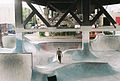 Park
Park -
 Park
Park -
 Yoyogi Park
 -
 Central Park
 -
 Park
Park


.jpg)
