Courtyard: Difference between revisions
CSV import Tags: mobile edit mobile web edit |
CSV import |
||
| Line 34: | Line 34: | ||
{{architecture-stub}} | {{architecture-stub}} | ||
<gallery> | |||
File:Umayyad_Mosquee_panoramic.jpg|Courtyard | |||
File:Residenz5,_München.jpg|Courtyard | |||
File:Cour_Puget_2,_Palais_du_Louvre,_Paris_25_April_2012.jpg|Courtyard | |||
File:Hôtel_de_Sully,_cour_intérieure.jpg|Courtyard | |||
File:Arkadenhof_der_Universität_Wien-1201-Bearbeitet.jpg|Courtyard | |||
File:Lidzbark_Warmiński_zamek_dziedziniec(WLZ12).jpg|Courtyard | |||
File:Wiki_Loves_Pyramids_-_Teotihuacan_-_Palace_of_Quetzalpapalotl_-_05.jpg|Courtyard | |||
File:Spain_Andalusia_Granada_BW_2015-10-25_17-28-47.jpg|Courtyard | |||
File:Oak_Ridge_Apartments_(7345691882).jpg|Courtyard | |||
File:Fort_Hall_Replica,_Courtyard,_Pocatello_ID.jpeg|Courtyard | |||
File:Kaapelitehdas_inside_yard.jpg|Courtyard | |||
File:Palais_Bahia_(The_Bahia_Palace)_(7346181900).jpg|Courtyard | |||
</gallery> | |||
Latest revision as of 12:02, 18 February 2025
Courtyard is an architectural feature that is a completely or partially enclosed area, often found in the center of a building or group of buildings. Courtyards have been used in architecture for thousands of years and serve various purposes, including providing light, ventilation, privacy, and a tranquil outdoor space for occupants. They are common in many cultural and historical contexts, from ancient Roman houses to traditional Chinese courtyards, known as siheyuan.
History[edit]
The concept of the courtyard has ancient origins, with examples dating back to the civilizations of Mesopotamia, where they were used in domestic and religious buildings to provide secluded outdoor space. In Roman architecture, the courtyard, or atrium, was central to the design of a domus (house), serving as a light source and a gathering area. Islamic architecture also made significant use of courtyards, particularly in mosques and madrasas, where they provided a serene setting for prayer and contemplation.
Design and Features[edit]
A courtyard's design can vary significantly depending on its intended use, cultural context, and climate. In warmer climates, courtyards often feature gardens, fountains, or pools to cool the surrounding buildings. In cooler climates, they may be more enclosed to trap heat and provide a sheltered outdoor area. Courtyards can be found in various settings, including residential, commercial, and religious buildings.
Residential Courtyards[edit]
In residential architecture, a courtyard can provide a private outdoor space that is secure and secluded from the outside world. It can also enhance natural lighting and ventilation, contributing to a more sustainable and comfortable living environment.
Commercial Courtyards[edit]
In commercial settings, courtyards can serve as communal spaces for employees or customers, offering a place to relax, eat, or meet informally. They can also enhance the aesthetic appeal of a building, making it more inviting and attractive.
Religious Courtyards[edit]
Courtyards in religious buildings, such as churches, mosques, and temples, often have symbolic meanings and are designed to create a peaceful, contemplative environment. They may include gardens, water features, and religious iconography.
Cultural Significance[edit]
Courtyards hold different cultural significances around the world. In many cultures, they are seen as a symbol of community and family life, serving as a central gathering place for social activities and ceremonies. They also reflect the relationship between architecture and the natural environment, demonstrating how buildings can incorporate outdoor elements for functional and aesthetic purposes.
Modern Use[edit]
Today, courtyards continue to be an important element in architecture, offering a blend of indoor and outdoor space that can enhance the quality of life for occupants. They are used in a variety of building types, including homes, office buildings, schools, and healthcare facilities, demonstrating their versatility and enduring appeal.
See Also[edit]

This article is a architecture-related stub. You can help WikiMD by expanding it!
-
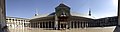 Courtyard
 -
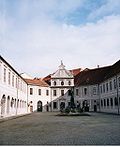 Courtyard
 -
 Courtyard
 -
 Courtyard
 -
 Courtyard
 -
 Courtyard
 -
 Courtyard
 -
 Courtyard
 -
 Courtyard
 -
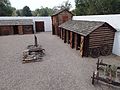 Courtyard
 -
 Courtyard
 -
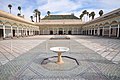 Courtyard


.jpg)


.jpg)


_(7346181900).jpg)
