Parasitoid: Difference between revisions
CSV import |
CSV import |
||
| Line 26: | Line 26: | ||
{{biology-stub}} | {{biology-stub}} | ||
{{agriculture-stub}} | {{agriculture-stub}} | ||
<gallery> | |||
File:CSIRO_ScienceImage_2357_Spotted_alfalfa_aphid_being_attacked_by_parasitic_wasp.jpg|Spotted alfalfa aphid being attacked by parasitic wasp | |||
File:Pteromalid_hyperparasitoid.jpg|Pteromalid hyperparasitoid | |||
File:Female_Apocephalus_borealis_ovipositing_into_the_abdomen_of_a_worker_honey_bee.png|Female Apocephalus borealis ovipositing into the abdomen of a worker honey bee | |||
File:Ripiphorid_larva_on_wing_of_braconid_wasp.jpg|Ripiphorid larva on wing of braconid wasp | |||
File:Strepsiptera.png|Strepsiptera | |||
File:Orussus_coronatus.jpg|Orussus coronatus | |||
File:Ichneumon_wasp_(Megarhyssa_macrurus_lunato)_(7686081848).jpg|Ichneumon wasp (Megarhyssa macrurus lunato) | |||
File:Stylogaster_macalpini_(12947561584,_cropped)_(cropped).jpg|Stylogaster macalpini | |||
File:Epiricania_hagoromo_on_Euricania_facialis_(cropped).JPG|Epiricania hagoromo on Euricania facialis | |||
File:Potter_Wasp_building_mud_nest_near_completion.JPG|Potter Wasp building mud nest near completion | |||
File:Odynerus_spinipes^_Vespidae._See_parasite_note_-_Flickr_-_gailhampshire.jpg|Odynerus spinipes | |||
File:Encarsia_formosa,_an_endoparasitic_wasp,_is_used_for_whitefly_control.jpg|Encarsia formosa, an endoparasitic wasp, is used for whitefly control | |||
</gallery> | |||
Revision as of 12:01, 18 February 2025
Parasitoids are a group of organisms that are primarily insects belonging to the order Hymenoptera, which includes wasps, bees, and ants, but can also be found in other insect orders such as Diptera (flies). They play a crucial role in controlling pest populations, making them significant in both agricultural and natural ecosystems. Unlike true parasites, parasitoids eventually kill or sterilize their hosts, typically during their larval stage, making their relationship with their hosts a fatal one.
Biology and Life Cycle
Parasitoids have a unique life cycle that distinguishes them from other parasitic organisms. The female parasitoid lays her eggs in or on the body of a host organism, which is usually a larva or pupa of another insect. Upon hatching, the parasitoid larvae feed on the host, eventually leading to the host's death. This life cycle can be categorized into two main strategies: endoparasitism and ectoparasitism. Endoparasitism involves the parasitoid living inside the host's body, while ectoparasitism refers to parasitoids that attach to the exterior of the host.
Ecological Role
Parasitoids are considered natural biological control agents, regulating the populations of their host species. This control mechanism is crucial in maintaining ecological balance and preventing the overpopulation of certain pest species. Their role in Integrated Pest Management (IPM) programs has been widely recognized, where they are used as a sustainable alternative to chemical pesticides.
Taxonomy and Diversity
The majority of parasitoid species belong to the Hymenoptera order, with significant families including Braconidae, Ichneumonidae, and Chalcididae. However, parasitoid species are also found in the Diptera order, notably within the families Tachinidae and Phoridae. The diversity of parasitoids reflects their adaptation to different ecological niches and host species.
Human Impact
The use of parasitoids in agriculture has been a subject of research for many years. By targeting specific pest species, parasitoids can significantly reduce crop damage without the need for harmful chemicals. This approach not only benefits the environment by reducing pesticide use but also supports sustainable farming practices. However, the introduction of parasitoids into new environments for biological control purposes must be carefully managed to avoid unintended ecological consequences.
Challenges and Research
Research on parasitoids involves understanding their biology, ecology, and interactions with their hosts. Challenges in parasitoid research include the identification of new species, understanding the specificity of host-parasitoid relationships, and the development of effective release strategies in biological control programs. Advances in genetic and molecular technologies are providing new insights into parasitoid biology, offering potential for improved pest management strategies.
Conclusion
Parasitoids represent a fascinating and diverse group of organisms with significant ecological and economic impacts. Their role in natural pest control highlights the importance of understanding and conserving these species for sustainable agricultural practices and ecosystem health.

 | This agriculture article is a stub. You can help Wikipedia by adding missing information. |
-
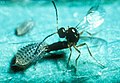 Spotted alfalfa aphid being attacked by parasitic wasp
 -
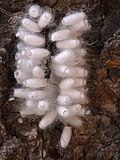 Pteromalid hyperparasitoid
 -
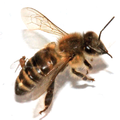 Female Apocephalus borealis ovipositing into the abdomen of a worker honey bee
 -
 Ripiphorid larva on wing of braconid wasp
 -
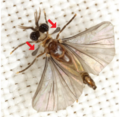 Strepsiptera
 -
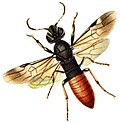 Orussus coronatus
 -
 Ichneumon wasp (Megarhyssa macrurus lunato)
 -
 Stylogaster macalpini
 -
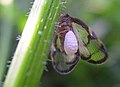 Epiricania hagoromo on Euricania facialis
 -
 Potter Wasp building mud nest near completion
 -
 Odynerus spinipes
 -
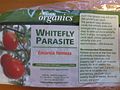 Encarsia formosa, an endoparasitic wasp, is used for whitefly control


_(7686081848).jpg)
_(cropped).jpg)
.JPG)


