Jöns Jacob Berzelius: Difference between revisions
CSV import Tags: mobile edit mobile web edit |
CSV import |
||
| Line 40: | Line 40: | ||
[[Category:History of chemistry]] | [[Category:History of chemistry]] | ||
{{Chemistry-stub}} | {{Chemistry-stub}} | ||
<gallery> | |||
File:Berzelius_Reseanteckningar_1903_frontespis.png|Jöns Jacob Berzelius | |||
File:Jöns_Jacob_Berzelius.png|Jöns Jacob Berzelius | |||
File:Jöns_Jacob_Berzelius_daguerreotype.jpg|Jöns Jacob Berzelius | |||
File:Lärbok_i_kemien_(vol._I-III).jpg|Jöns Jacob Berzelius | |||
File:Lärbok_i_organiska_kemien.jpg|Jöns Jacob Berzelius | |||
File:Berzelius-4.jpg|Jöns Jacob Berzelius | |||
File:Berzelius,_Jöns_Jacob_–_Letters_of_Jöns_Jakob_Berzelius_and_Christian_Friedrich_Schönbein,_1900_–_BEIC_10972644.jpg|Jöns Jacob Berzelius | |||
File:Berzelius_statue_jeh.jpg|Jöns Jacob Berzelius | |||
File:Berzelianite,_Calcite-361052.jpg|Jöns Jacob Berzelius | |||
</gallery> | |||
Latest revision as of 12:00, 18 February 2025
Jöns Jacob Berzelius (1779–1848) was a Swedish chemist and one of the most acclaimed scientists of the 19th century. He is best known for his work in developing chemical notation, his contributions to the theory of chemical proportions and his discovery of several chemical elements. Berzelius is often referred to as the father of modern chemistry for his efforts in transforming chemistry into a systematic science.
Early Life and Education[edit]
Jöns Jacob Berzelius was born on August 20, 1779, in Väversunda, Sweden. After the death of his parents, he was raised by his uncle. Berzelius enrolled at Uppsala University in 1796, where he initially studied medicine. During his studies, he developed a strong interest in chemistry, influenced by the works of Antoine Lavoisier.
Career and Contributions[edit]
After completing his medical degree, Berzelius dedicated himself to research in chemistry. He served as a professor of medicine and pharmacy at the Karolinska Institute and later as a professor of chemistry at the Royal Institute of Technology in Stockholm.
Chemical Notation[edit]
Berzelius is credited with introducing the modern system of chemical notation. He proposed using letters to represent elements and subscript numbers to indicate the number of atoms of each element in a compound. This system laid the foundation for the chemical formulas used today.
Atomic Weights and Chemical Proportions[edit]
One of Berzelius's significant contributions was his work on atomic weights. He conducted precise measurements of atomic weights for a large number of elements, which allowed him to formulate the law of definite proportions. This law states that chemical compounds are formed of elements combined in specific proportions by weight.
Discovery of Elements[edit]
Throughout his career, Berzelius discovered several new elements, including cerium, selenium, and thorium. He also isolated silicon, zirconium, and titanium. His methodical approach to the discovery and analysis of elements greatly contributed to the field of inorganic chemistry.
Electrochemistry[edit]
Berzelius also made contributions to electrochemistry, including the development of the theory of dualism. This theory suggested that compounds are formed by the combination of positive and negative electrical charges, which was an important step towards understanding chemical bonding.
Legacy[edit]
Berzelius's work had a profound impact on the field of chemistry. His systematic approach to chemical analysis and his development of chemical notation helped transform chemistry into a modern science. The Berzelian Society, named in his honor, continues to promote the study of chemistry in Sweden.
Berzelius's contributions were recognized internationally during his lifetime. He was a member of the Royal Swedish Academy of Sciences and received numerous awards and honors from scientific societies around the world.
Selected Works[edit]
- Essay on the Theory of Chemical Proportions and on the Chemical Influence of Electricity (1819)
- Annual Review of the Progress of Chemistry and Mineralogy (1821–1848)
See Also[edit]
References[edit]
<references/>

-
 Jöns Jacob Berzelius
 -
 Jöns Jacob Berzelius
 -
 Jöns Jacob Berzelius
 -
 Jöns Jacob Berzelius
 -
 Jöns Jacob Berzelius
 -
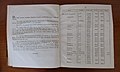 Jöns Jacob Berzelius
 -
 Jöns Jacob Berzelius
 -
 Jöns Jacob Berzelius
 -
 Jöns Jacob Berzelius


.jpg)


